

What happens when a longtime trial attorney and his culinary-trained son decide to build a Wagyu ranch together? You get Santos Patronos Ranch Wagyu, a family operation outside Seguin, Texas, built around elite Fullblood Wagyu genetics, great beef and a belief that consumers should understand where their food comes from.
On this episode of The Meat Dudes Podcast, we sat down with father-and-son team Ray Thomas and Ray Thomas Jr.—better known as Ray Ray—to talk about their journey into Wagyu, the mistakes they made along the way, the genetics they’ve invested in, how Ray Ray’s culinary background influences the beef they raise, and why Wagyu doesn’t have to be complicated or intimidating.
And, as usual, we spent plenty of time talking about how to cook and eat it.
From Trial Law to a Texas Wagyu Ranch
Santos Patronos didn’t begin with some master plan to build a premier Fullblood Wagyu program.
Ray Thomas had been around ranching and cattle through his mother’s side of the family and had wanted a ranch of his own since he was a young attorney. Eventually, he and his law partners purchased a ranch, where the Thomas family spent years entertaining, grilling and cooking.
Ray Ray basically grew up around that grill.
Years later, after the family moved to their current ranch near Seguin, Ray Ray graduated from TCU and appeared headed toward law school himself.
Then things changed.
Instead of following his dad into law, Ray Ray decided he wanted to see if he could make a run at the ranch.
The family got behind him, and the idea began taking shape: transition the cattle operation toward Wagyu, create a destination where people could visit the ranch, and ultimately produce some of the best beef they possibly could.
That family decision eventually became Santos Patronos Ranch.
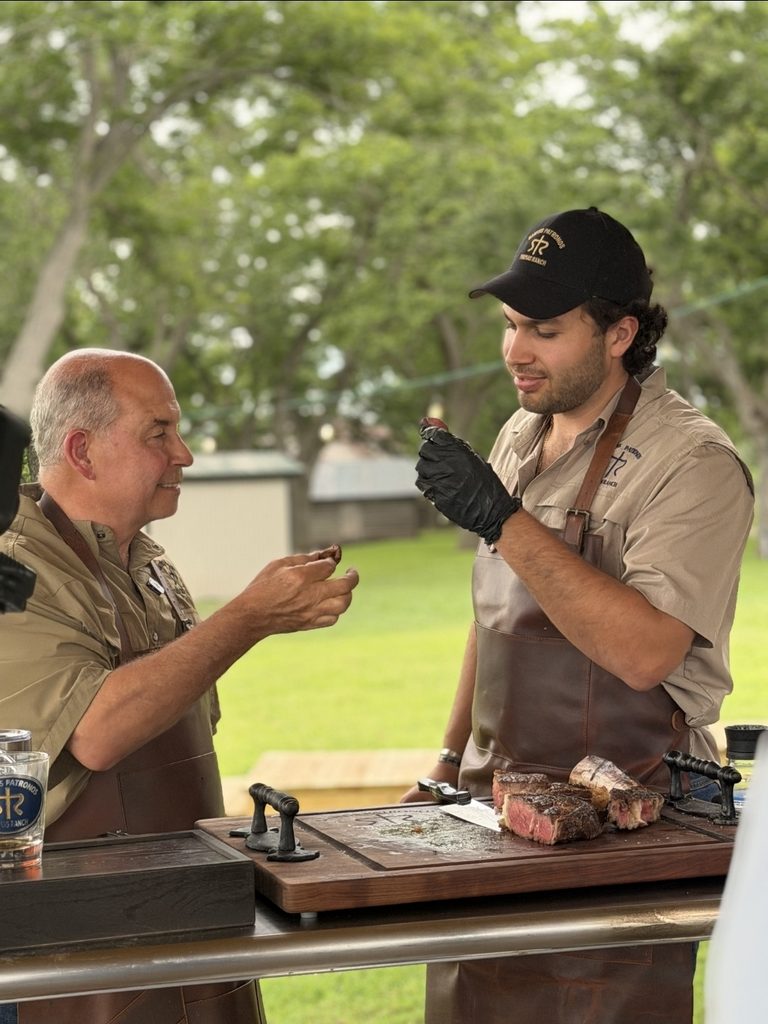
From the Ranch to Culinary School in Florence
Ray Ray brings something else to the operation that we don’t see with every rancher: a culinary background.
Cooking had always been part of his life. As he got older, he went from helping his dad grill to being the guy behind the grill whenever friends or family came over.
After college, he took that interest much further and spent about six months attending culinary school in Florence, Italy.
There, he studied both restaurant-style cooking and a more traditional home-style approach—learning to look at what was available and figure out how to turn it into a meal.
That experience matters when you’re raising beef.
Santos Patronos isn’t thinking only about producing cattle. They’re thinking about the final experience on the plate.

Building Santos Patronos Ranch Wagyu
Like a lot of good stories, their Wagyu program didn’t start perfectly.
Initially, the plan was to purchase a Wagyu bull and put him over their existing Beefmaster cattle. Instead, they were offered a pregnant Fullblood Wagyu female.
Ray bought her.
They lost the pregnancy.
Then they dug deeper into the genetics and realized the cow wasn’t exactly the foundation animal they thought they had purchased.
Welcome to Wagyu.
But instead of walking away, they started learning.
They surrounded themselves with experienced people in the Wagyu industry and eventually purchased a bull from Lone Mountain Wagyu. They named their first Wagyu cow Eve and the new bull Adam.
Adam and Eve.
Not a bad place to start.
Then things got serious.
The $190,000 Wagyu Bull
One of the best stories from the podcast involves a bull named Mr. Universe.
At the time, Mr. Universe was highly ranked through Australia’s BREEDPLAN system. Ray saw an opportunity and ended up paying $190,000 for a half interest in the bull.
That’s one way to jump into Wagyu.
But the investment wasn’t only about owning genetics.
The bull came from M6 Ranch, and Ray used the relationship as an opportunity for Ray Ray to intern there and learn directly from experienced Wagyu producers.
It also immediately connected Santos Patronos with more people throughout the industry.
Those relationships eventually stretched around the world. When international Wagyu producers traveled through Texas around the 2023 World Wagyu Council gathering in San Antonio, Santos Patronos was selected as one of the ranches they visited.
That meant producers from Australia, Canada, England, Ireland, Brazil, Mexico and elsewhere were suddenly standing on this relatively new Texas Wagyu operation.
It’s something Ray emphasized throughout our conversation: Wagyu is an incredibly global community, and relationships have been essential to their growth.
Wagyu Is a Spectrum
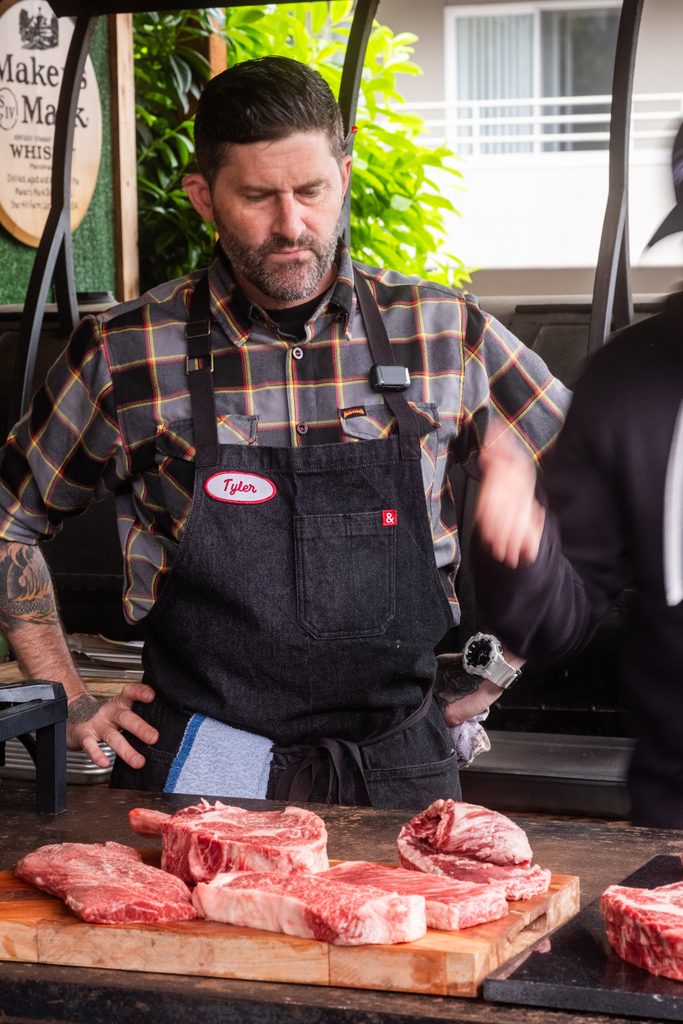
Of course, we had to talk about one of our favorite subjects.
One of the biggest misconceptions Ray Ray encounters from consumers is the idea that if Wagyu isn’t from Japan, it isn’t “real Wagyu.“
But there’s a huge world of Wagyu outside Japan, including right here in America.
There are F1 crosses, higher-percentage animals, Purebred Wagyu and 100% Fullblood Wagyu. Different genetics and different production systems create very different beef.
Santos Patronos Ranch Wagyu is another example of why simply saying “Wagyu” doesn’t tell the whole story.
And that’s why education matters.
The average consumer shouldn’t need a degree in cattle genetics to buy a steak. But they should be able to understand what they’re buying, who raised it and what makes it different.
American Wagyu Didn’t Forget About Flavor
This was one of our favorite parts of the conversation.
We’re cooking our way through Wagyu ranches across the United States, and one thing has become very clear:
American Wagyu didn’t forget about flavor.
Yes, we want marbling.
Yes, we want tenderness.
But we’re eating beef.
It should taste like beef.
We’re finding incredible beef flavor in American Wagyu along with the marbling and richness people expect. Different genetics, ranches, feeds and environments can produce noticeably different eating experiences.
Ray made a similar point when discussing the results they’re beginning to see from the genetic investments they made years ago.
Marbling numbers are great, but if that marbling doesn’t translate into tenderness and flavor on the plate, what’s the point?
Exactly.
Is Wagyu Worth the Money?
We asked Ray Ray the question every Wagyu producer eventually hears:
Is it worth it?
His answer was basically: taste it.
They’ve watched it happen firsthand at farmers markets and trade shows. Someone takes a small sample, starts walking away, takes a bite—and turns around.
Now they want to know what they just ate.
The same thing happened when Santos Patronos put their food truck outside their retail store and started serving Wagyu smash burgers. Ray said store sales doubled that day, with many of the people eating the burgers heading inside afterward to buy beef.
That’s the thing about Wagyu.
You can talk about genetics and marbling all day.
Eventually, somebody needs to eat it.
Wagyu Doesn’t Have to Mean a $200 Steak
This might be one of the most important parts of making Wagyu more approachable.
People hear Wagyu and immediately think expensive.
But Wagyu is an entire animal.
You don’t have to start with a giant Fullblood ribeye.
Ray Ray pointed out that there are lesser-known cuts that can deliver an incredible eating experience without the price tag of the traditional premium cuts.
Denver steak was one of his original sleeper cuts. He’s also a big fan of turning Wagyu chuck roast into barbacoa.
They’ve even done blind tastings comparing Wagyu ribeye with chuck eye, sometimes finding the group split right down the middle over which one they preferred.
That’s why we constantly tell people to look beyond the Hollywood cuts.
For every ribeye, strip or tenderloin, there’s another cut worth exploring.
Sometimes you can buy an incredible piece of Wagyu for around what you’d spend on a conventional premium steak.
We’d rather eat better beef.
How Do You Cook Wagyu?
This might be our favorite part.
People are scared of cooking Wagyu because they spent more money on it and don’t want to screw it up.
Ray Ray’s advice?
Don’t overthink it.
He generally treats it like steak. Keep the seasoning simple, pay attention to the increased fat content and watch for flare-ups if you’re cooking over an open flame.
Their seasoning philosophy is pretty simple too: sea salt and pepper.
Ray prefers just salt.
We’re definitely on board with that.
At The Meat Dudes, when we’re evaluating Wagyu from ranches around the country, we’re usually cooking with salt only because we want to taste the beef.
Great Wagyu doesn’t need to be buried under seasoning.
Santos Patronos even has a three-step Wagyu cooking philosophy posted in its store: get the surface dry, season it simply and don’t screw it up.
That’s pretty good advice.
Wagyu Is More Forgiving Than You Think
Ray Ray told us a story that perfectly illustrates why people shouldn’t be afraid of Wagyu.
While cooking for a group at the ranch, he accidentally took a ribeye to medium-well.
Not exactly the plan.
One of the guests had spent his career working in high-end steakhouses, so Ray Ray understandably thought he’d ruined the steak in front of exactly the wrong person.
Instead, the guy ate it and pointed out something interesting:
It was still tender and juicy.
That’s the beauty of all that intramuscular fat.
We’re not recommending that you intentionally cook every Wagyu steak to medium-well. But people need to stop treating Wagyu like it’s a bomb they’re trying to defuse.
Salt it.
Get your heat right.
Use a thermometer.
Pay attention to the fat.
Cook it.
Eat it.
You’re going to be okay.
Connecting People With the Ranch
Santos Patronos is also doing something we love: getting consumers closer to the people raising their food.
Their ranch lodge hosts family gatherings, corporate retreats, private dinners and other events.
Visitors can tour the operation, learn about the cattle and see what goes into raising the beef before sitting down to eat a meal from the same ranch.
That’s powerful.
Most people have never been on a cattle ranch. They see a steak in a grocery store or restaurant but have very little connection to everything that happened before that steak reached the plate.
Santos Patronos is trying to close that gap.
Know your rancher.
Understand how your beef was raised.
Then sit down and taste the result.
Better Beef Doesn’t Have to Be Complicated
That’s probably our biggest takeaway from this conversation.
There’s some serious work happening behind the scenes at Santos Patronos: Fullblood genetics, expensive breeding decisions, years spent raising animals and a tremendous amount of thought going into the finished product.
But the experience for the consumer doesn’t need to be complicated.
Find a ranch you trust.
Learn a little about what they’re raising.
Try a cut you haven’t had before.
Keep the cooking simple.
And eat better beef.
That’s exactly what we’re trying to accomplish as we continue cooking our way through American Wagyu ranches around the country.
The more we learn, the more obvious it becomes that there isn’t one single American Wagyu experience.
Every ranch has a story.
Every producer has a philosophy.
And every box of beef gives us another opportunity to learn what American Wagyu can be.
Santos Patronos is a great example of that.
A father and son. A family ranch. Elite genetics. A culinary perspective. And a whole lot of passion for producing great beef.
We’ll be cooking their Wagyu ourselves next.
And we can’t wait.
It’s just better beef.