
One of the biggest misconceptions about Wagyu beef is that there’s only one kind worth eating.
Some people hear Wagyu and immediately picture a Japanese A5 steak with extraordinary marbling. Others see an American Wagyu burger or ribeye and wonder whether it’s really Wagyu.
But Wagyu beef is much more interesting than either of those assumptions.
At The Meat Dudes, we’ve spent years cooking, tasting, and talking with ranchers who raise American Wagyu beef. And one of the biggest things we’ve learned is that Wagyu is a spectrum.
Fullblood, Purebred, and F1 Wagyu all have something different to offer. Each can deliver an incredible eating experience. The goal isn’t to crown one category the winner. It’s to understand what makes each unique, how those differences affect the beef on your plate, and which style of Wagyu you might enjoy most.
Because great Wagyu beef doesn’t have to look—or eat—the same way every time.
What Does Fullblood Wagyu Mean?
Fullblood Wagyu is 100% Wagyu, with a documented pedigree tracing back to the original Japanese Wagyu bloodlines, without crossing to non-Wagyu breeds.
In the United States, Fullblood Wagyu cattle can be registered with the American Wagyu Association, which uses pedigree records and DNA parentage verification to establish their lineage.
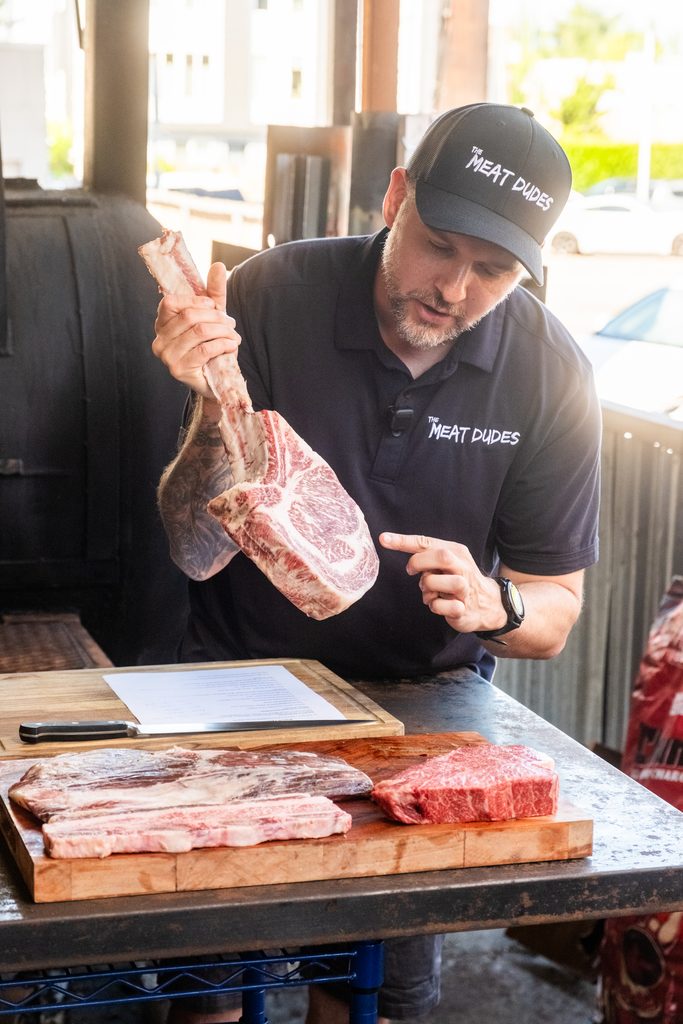
Fullblood cattle are often associated with the extraordinary marbling that has made Wagyu famous. That marbling is intramuscular fat—the fine flecks of fat running throughout the muscle.
When cooked properly, that fat contributes to a rich, tender, distinctive eating experience.
But here’s something important: Fullblood does not automatically mean every steak will have extreme marbling.
We’ve tasted Fullblood Wagyu from ranches across the country, and the differences can be remarkable. Some produce intensely marbled beef that feels almost luxurious with every bite. Others deliver a more restrained level of marbling with a deep, satisfying beef flavor.
Genetics matter, but so do feeding programs, animal management, age, and the individual animal.
Who Is Fullblood Wagyu For?
Fullblood Wagyu can be a great choice for someone who wants to explore the full potential of Wagyu genetics.
It appeals to steak enthusiasts, serious home cooks, and people looking for a memorable dining experience. Highly marbled Fullblood Wagyu can be especially enjoyable in smaller portions, where you can appreciate its richness without needing a massive steak.
We like to think of some of these steaks as celebration steaks. They’re the ones you bring out for a birthday, anniversary, or a night when you want to experience something extraordinary.
But Fullblood Wagyu isn’t reserved for special occasions. Plenty of Fullblood steaks have the balance to be enjoyed as a traditional steak dinner.
It all depends on the beef.
What Is Purebred Wagyu?
Purebred Wagyu contains at least 93.75% Wagyu genetics, with the remaining ancestry coming from another cattle breed somewhere in its family history.
That might sound like an oddly specific percentage, but there’s a reason for it.
Breeders can start with an F1 Wagyu cross and breed successive generations back to Purebred Wagyu cattle. With each generation, the percentage of Wagyu genetics increases.
Here’s what that progression looks like in a typical breeding program:
| Classification | Wagyu genetics |
| F1 | 50% |
| F2 | 75% |
| F3 | 87.5% |
| F4 / Purebred threshold | 93.75% |
| Fullblood | 100%, with qualifying lineage |
Purebred is not the same thing as Fullblood, even when the percentage of Wagyu genetics becomes extremely high. Fullblood is a pedigree classification, not simply a percentage that can be reached through additional crossbreeding.
What Does Purebred Wagyu Taste Like?
This is where things get interesting.
Purebred Wagyu can produce tremendous marbling, tenderness, and flavor. In fact, we’ve tasted Purebred Wagyu steaks that could easily hold their own against some Fullblood steaks.
There’s no magic line at 100% where beef suddenly becomes incredible.
A well-raised Purebred animal with excellent genetics can produce exceptional beef, just as a Fullblood animal can produce beef with more moderate marbling.
Purebred Wagyu often occupies a fascinating part of the spectrum, with the potential for a luxurious eating experience while still offering the substantial beef character many steak lovers enjoy.
Who Is Purebred Wagyu For?
Purebred Wagyu is a fantastic option for consumers who want to explore higher-percentage Wagyu genetics without necessarily seeking the richest, most heavily marbled steak available.
It can be a great fit for someone who loves a beautiful ribeye, New York strip, or tenderloin and wants to experience the tenderness, flavor, and marbling that make Wagyu special.
And for ranchers, Purebred breeding programs offer opportunities to develop cattle with particular performance and meat-quality characteristics while preserving a very high percentage of Wagyu genetics.
What Is F1 Wagyu?
F1 stands for first filial generation, which is simply the first generation of offspring produced by crossing two different breeds.
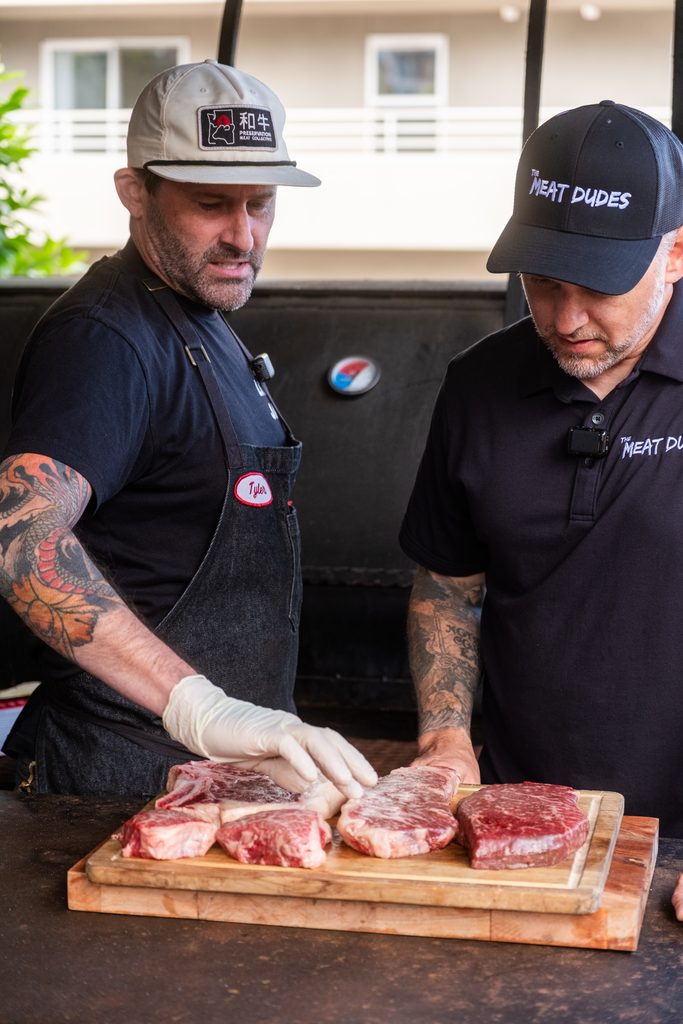
In American Wagyu production, an F1 is commonly the result of breeding a Fullblood Wagyu animal with an Angus animal.
That produces offspring with approximately 50% Wagyu genetics and 50% Angus genetics.
But Angus isn’t the only breed used.
We’ve seen Wagyu crossed with Holstein, Brangus, and other breeds, each bringing different characteristics to the resulting beef.
And that’s one of the things we find so exciting about American Wagyu.
Why Cross Wagyu With Other Breeds?
Different cattle breeds have different strengths.
Wagyu genetics are especially valued for their ability to produce intramuscular fat and desirable eating characteristics. Angus genetics, for example, can contribute desirable growth, carcass traits, and familiar beef flavor.
When ranchers combine these genetics thoughtfully, they can produce beef that brings together qualities from both breeds.
For the consumer, that can mean a steak with excellent marbling, tenderness, and a rich beef flavor while retaining the familiar experience of eating a traditional American steak.
What Does F1 Wagyu Taste Like?
A great F1 ribeye can deliver a beautiful combination of marbling, tenderness, and that bold beef flavor many Americans grew up enjoying.
It’s often the kind of steak where you can put a big ribeye on the grill, cook it to your preferred temperature, and enjoy the entire thing.
But don’t mistake F1 for a lower-quality product.
We’ve tasted F1 Wagyu that absolutely blew us away.
A well-produced F1 steak can outperform a poorly produced steak with a much higher percentage of Wagyu genetics. The percentage tells you something about ancestry. It doesn’t tell you everything about the eating experience.
Who Is F1 Wagyu For?
F1 Wagyu is often an excellent introduction for someone who has never tried American Wagyu beef.
It can also be perfect for the person who loves a traditional steakhouse experience but wants something with more marbling and tenderness.
F1 Wagyu is commonly positioned at a more accessible price point than Fullblood Wagyu, although actual prices depend on the ranch, cut, quality, and production costs.
For restaurants, families, backyard grillers, and people who simply love a great steak, F1 Wagyu can be an outstanding choice.
Wagyu Is a Spectrum, Not a Competition
Here’s where we think the conversation around Wagyu sometimes goes wrong.
People want to rank everything.
Fullblood must be better than Purebred. Purebred must be better than F1. And Japanese Wagyu must automatically be better than American Wagyu.
But that’s not how we look at beef.
We’ve cooked American Wagyu steaks with tremendous marbling, steaks with a more traditional beef profile, and just about everything in between.
And we’ve enjoyed them all.
Think about it this way.
Sometimes you want a heavily marbled ribeye with an incredibly rich eating experience. Sometimes you want a big steak with a bold beef flavor that you can throw on the grill on a Tuesday night.
Neither experience needs to be better than the other.
They’re different.
That’s what we mean when we say Wagyu is a spectrum.
The best Wagyu steak isn’t necessarily the one with the highest percentage of Wagyu genetics or the most marbling. It’s the one that delivers the eating experience you’re looking for.
Wagyu Is More Than Marbling
Marbling gets most of the attention, and understandably so. It’s visually impressive, and it can have a tremendous impact on tenderness, juiciness, and flavor.
But we don’t think Wagyu should be judged by marbling alone.
When we taste Wagyu beef, we’re paying attention to a lot more.
We want to know how it smells as it cooks. We want to experience the texture, the richness of the fat, the intensity of the beef flavor, and how the steak finishes on the palate.
Does it have a buttery quality? Is it nutty, savory, mineral, or deeply beefy? Does the richness linger, or does the steak have a surprisingly clean finish?
We’ve tasted steaks from different American ranches with similar levels of marbling that delivered noticeably different experiences.
And that’s part of what makes this so fascinating.
Every ranch has a story, and the decisions ranchers make can influence the beef they produce.
Is American Wagyu Real Wagyu?
Absolutely.
American Wagyu comes from genuine Wagyu genetics originating in Japan. Those genetics have been developed through breeding programs here in the United States, producing Fullblood, Purebred, and crossbred Wagyu cattle.
American Wagyu isn’t trying to be a copy of Japanese Wagyu.
It’s an opportunity to explore what Wagyu genetics can produce under different ranching practices, environments, breeding decisions, and feeding programs.
Some American ranchers specialize in Fullblood Wagyu. Others focus on Purebred cattle. Many produce outstanding F1 crosses.
We don’t believe one approach should invalidate the others.
We believe consumers should understand what they’re buying.
And that starts with honest information about the cattle and the ranchers raising them.
What About Wagyu in Japan?
Japan approaches Wagyu classification differently from the United States.
Under Japan’s official definition, Wagyu refers to four recognized Japanese cattle breeds—Japanese Black, Japanese Brown, Japanese Shorthorn, and Japanese Polled—as well as qualifying crosses among those four Wagyu breeds.
Crosses between Wagyu and non-Wagyu breeds, such as Wagyu-Holstein, are not classified as Wagyu beef under that definition. They are generally marketed as crossbred beef.
Japan also doesn’t use the American Fullblood/Purebred/F1 marketing framework in quite the same way. The term Purebred, meaning a minimum of 93.75% Wagyu ancestry after generations of grading up, is particularly associated with breeding and registration systems outside Japan.
One important distinction: Japanese Wagyu does not have to come from a single unmixed line of one of the four recognized breeds. Crosses among those four recognized Wagyu breeds can also qualify as Wagyu in Japan.
So although these genetic classifications are useful when discussing American and Australian Wagyu, the labeling rules and terminology aren’t identical worldwide.
How Do You Know Which Wagyu to Buy?
Our advice is simple: Start with the rancher, not just the percentage.
Ask questions.
What are the genetics? How are the cattle raised and finished? What kind of eating experience is the ranch trying to produce? Is the beef registered or otherwise traceable to its claimed Wagyu ancestry?
A Fullblood designation tells you something important about pedigree. A Purebred designation tells you something about the percentage of Wagyu ancestry. An F1 designation tells you about the first-generation cross.
But none of those labels alone can tell you exactly how a steak will taste.
That’s why we believe tasting the beef matters.
Why We’re Building the Meat Dudes Approved Wagyu Map
Over the past several years, Chef Tyler and I have had the opportunity to meet ranchers from across the United States, learn about their cattle, and cook some truly remarkable American Wagyu beef.
And one thing has become very clear.
There’s a lot of incredible Wagyu beef being raised in this country, often by smaller, family-run ranches that most consumers have never heard of.
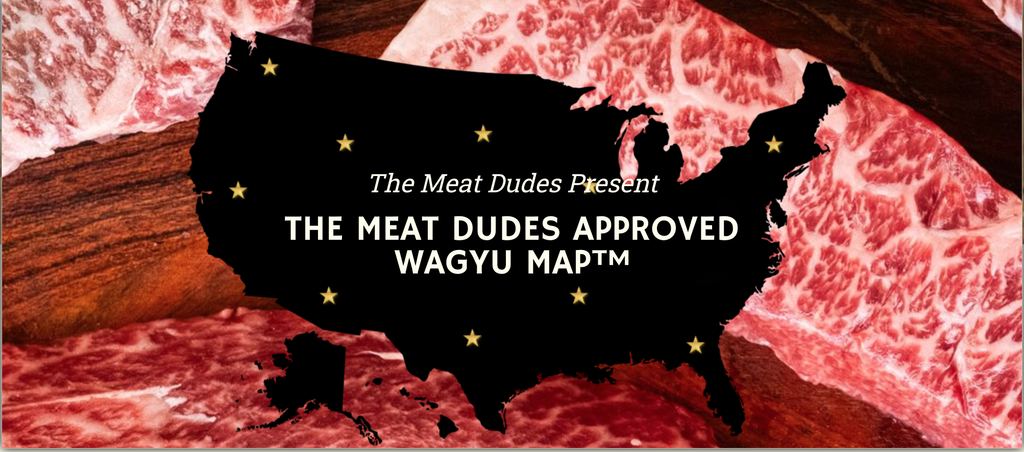
That’s why we’re building the Meat Dudes Approved Wagyu Map.
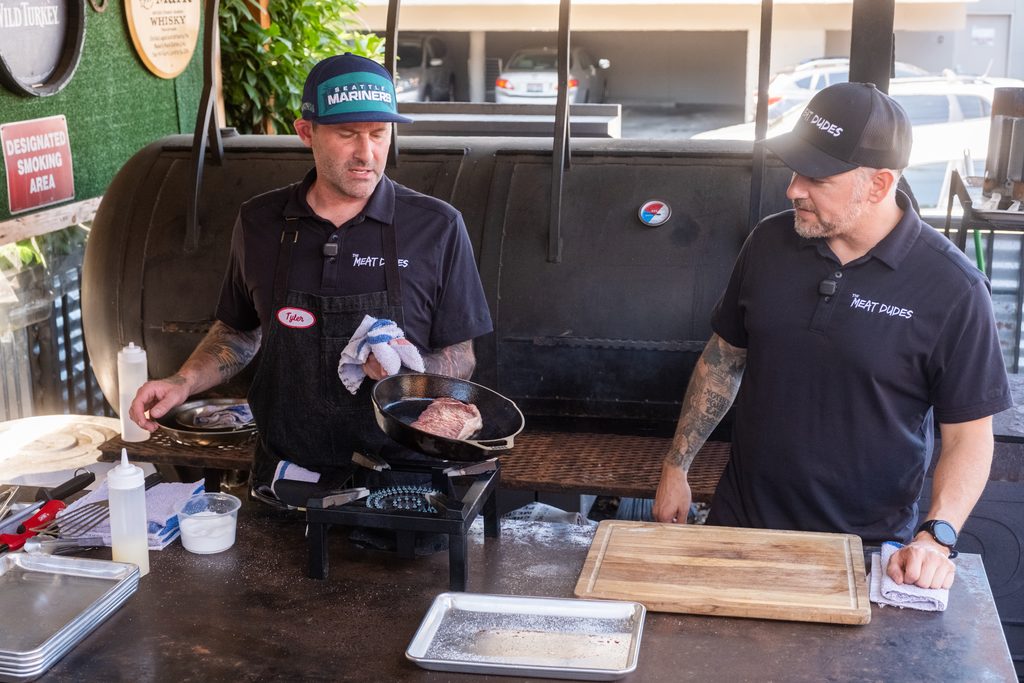
Our goal is to help consumers discover American Wagyu ranchers, understand what makes their beef unique, and feel more confident buying and cooking Wagyu at home.
We’re cooking, tasting, and evaluating beef from ranches across the country. We’re learning about their genetics, feeding programs, and ranching philosophies. And we’re sharing those experiences through videos, ranch profiles, and conversations with the people doing the work.
We’re not building a list that says Fullblood is better than Purebred or F1.
We’re building a resource that helps people discover great Wagyu beef across the entire spectrum.
Because once you understand how much variety exists in American Wagyu, you realize there’s a whole world of beef worth exploring.
WAGYU, It’s just better beef.