


When most people think about a great steak, three cuts immediately come to mind: Ribeye, New York Strip and Tenderloin. We call those the “Hollywood cuts.” They’re the steaks everybody knows. They get the prime real estate in the butcher case. They dominate steakhouse menus. And when somebody decides they’re going to spend some money on a great steak, chances are they’re grabbing one of those three. But over the last three or four years, we’ve been watching another cut slowly make its way into the conversation: The Zabuton steak.
You may also know it as the Denver steak.
And after cooking Zabuton from Wagyu ranches all over the country, we keep asking the same question:
Is the Zabuton the next Hollywood cut?
We think it has a pretty damn good shot.
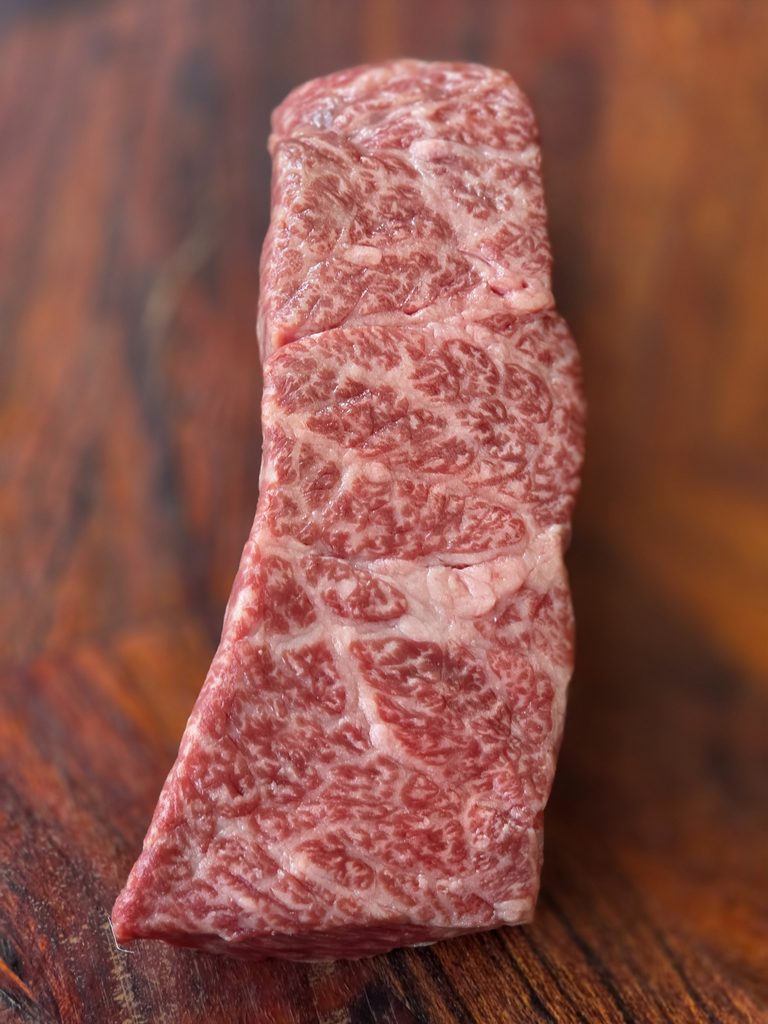
What Is a Zabuton Steak?
The Zabuton is one of those hidden gems that makes butchery so interesting.
It comes from the chuck primal—the shoulder area of the animal—and specifically from the under-blade portion of the chuck roll. The Denver cut is fabricated from the serratus ventralis muscle in that area.
That location is part of what makes the Zabuton so interesting.
When people hear “chuck,” they often think pot roast, stew meat or ground beef. The chuck contains plenty of muscles that benefit from long, slow cooking.
But hidden inside that same primal are some incredible steak cuts.
And the Zabuton might be our favorite.
The Beef Checkoff describes the Denver steak as extremely tender, with a good amount of marbling and beef flavor. It is cut from what it identifies as the fourth-most-tender muscle on the animal.
So this isn’t a tough piece of chuck that we’re trying to convince you is a steak.
It’s a legitimately great steak hiding in the shoulder.
Zabuton vs. Denver Steak: What’s the Difference?
This is where beef terminology can get a little confusing.
In the United States, you’ll most commonly hear this cut called a Denver steak. In Japanese beef terminology, you’ll hear Zabuton.
“Zabuton” refers to the traditional flat Japanese cushion, which is where the cut gets its name.
The terms are often used interchangeably because they center around the same highly marbled portion of the chuck under blade, although exact fabrication and trimming can vary between butchers and producers.
For what we’re talking about here, when you hear us say Zabuton or Denver steak, we’re talking about that beautifully marbled shoulder gem that we’ve become slightly obsessed with.
And lately, we’re seeing the name Zabuton more and more.
Why Is the Zabuton So Good?
There are four things we love about this steak:
Marbling. Tenderness. Flavor. Value.
That’s a pretty good combination.
The Zabuton naturally has good intramuscular marbling, and when you get into USDA Prime or Wagyu beef, it can become absolutely beautiful.
We’ve cut into American Wagyu Zabuton steaks that look like something you’d expect to pay serious money for at a steakhouse.
But here’s the important part:
It still tastes like beef.
You get richness from the marbling, tenderness from the muscle itself and that deep beef flavor we love from the chuck.
That’s a hell of an eating experience.
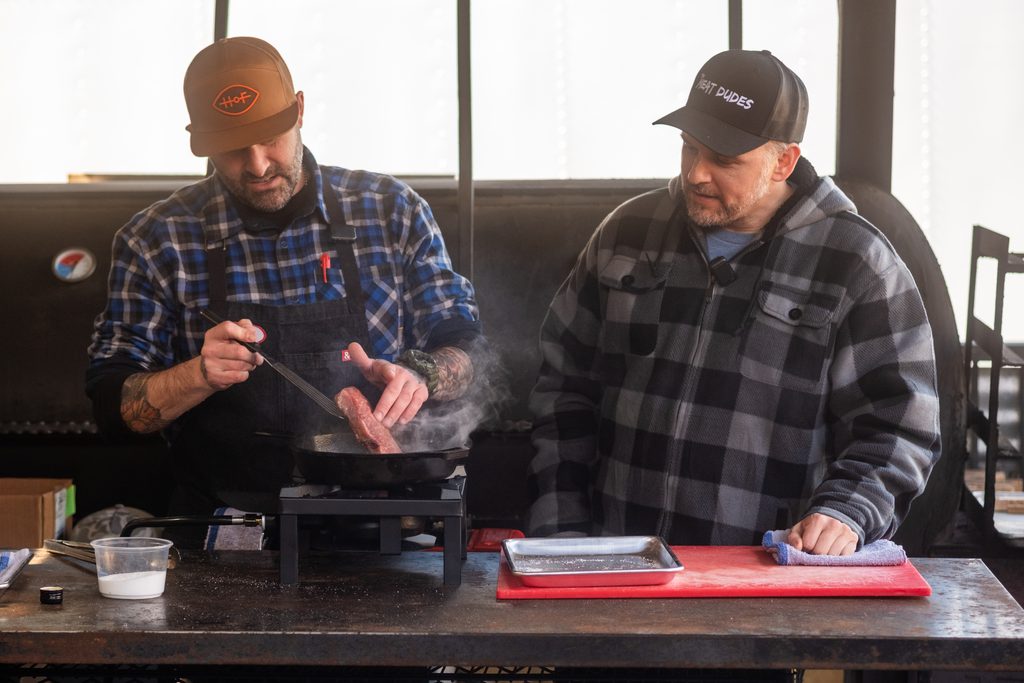
This Is Where Wagyu Zabuton Gets Really Interesting
If you’ve followed The Meat Dudes for any amount of time, you know we’re always talking about Wagyu as a spectrum.
Not every Wagyu steak needs to be an A5 ribeye.
In fact, one of the most exciting things about American Wagyu is discovering what Wagyu genetics and increased marbling can do to cuts outside the traditional steakhouse lineup.
Zabuton is a perfect example.
We’ve cooked Zabuton from multiple American Wagyu ranches while building the Meat Dudes Approved Wagyu Map, and it continues to be one of the cuts that gets us excited.
We’ve pan-seared it.
We’ve grilled it.
We’ve cooked it with basically nothing but salt.
And it doesn’t need much help.
One rancher we’ve interviewed even called Denver steak a “sleeper” when we asked about great cuts outside the ribeye.
That’s exactly how we feel about it.
Wagyu Zabuton vs. Choice Ribeye
Here’s where things get really interesting for the consumer.
We say this all the time:
Give us a Wagyu Zabuton over a Choice ribeye any day of the week.
And depending on the producer, grade and type of Wagyu you’re buying, those two steaks can sometimes live around a similar price point.
That’s a huge deal.
People automatically gravitate toward ribeye because they recognize the name.
We get it. Ribeye is great.
But if you have $30, $40 or $50 to spend on steak, don’t automatically assume that buying a lower-grade version of a famous cut is going to give you the best eating experience.
Sometimes the move is to buy a lesser-known cut from better beef.
That’s exactly where the Zabuton shines.
Instead of paying for the name recognition of a Hollywood cut, you may be able to put that money toward better genetics, better marbling and a completely different eating experience.
Better beef instead of a more famous steak.
That’s a trade we’ll make all day.
Zabuton Is Approachable Wagyu
There’s another reason we’re such big fans of the Zabuton:
It’s easy to cook.
One of the biggest misconceptions surrounding Wagyu is that you need some secret technique to cook it.
You don’t.
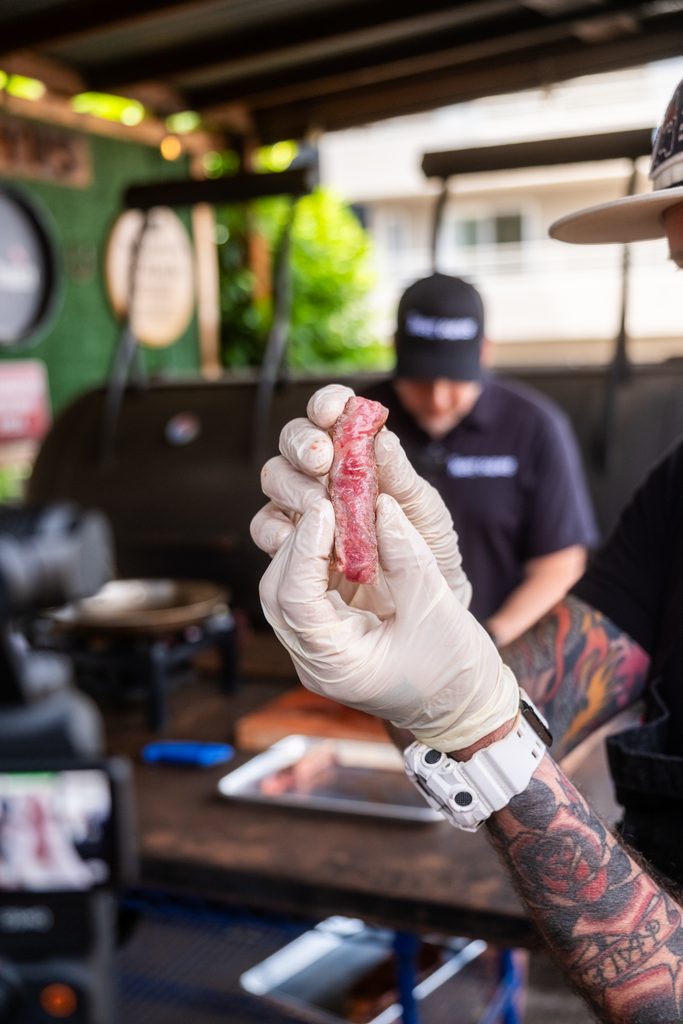
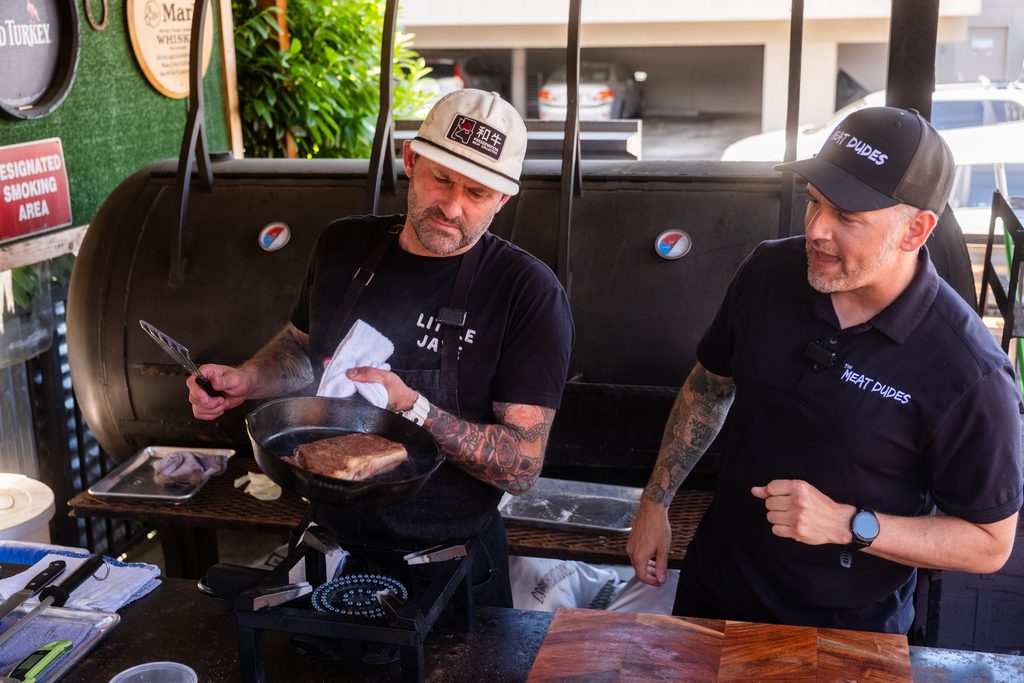
We’ve cooked Wagyu Zabuton in a hot cast-iron pan in just a few minutes. We’ve grilled it. We’ve cooked versions from different ranches with nothing more than salt.
Our basic philosophy stays the same:
Start with great beef.
Keep the seasoning simple.
Control your heat.
Watch for flare-ups if you’re grilling heavily marbled Wagyu.
Use a thermometer.
And don’t be scared of it.
For many American Wagyu Zabuton steaks, we’re looking somewhere around 125–130°F internal temperature, depending on the steak and how much fat we want to render.
Then let the beef do the talking.
That’s it.
The Chuck Deserves More Respect
The Zabuton also represents something bigger that we’ve been talking about for years.
There is so much more to a cow than ribeye, strip and tenderloin.
We’ve broken down chuck rolls where you can see completely different eating experiences sitting right next to each other. Cuts like the Delmonico and Zabuton can come from this same general area and deliver steaks that are completely different from what most consumers imagine when they hear the word “chuck.”
That’s why learning cuts matters.
And it’s why we’re constantly encouraging people to get outside the Hollywood cuts.
There are some incredible steaks hiding in parts of the animal that most people overlook.
The Zabuton may be the best example.
So, Is the Zabuton the Next Hollywood Cut?
Maybe.
Part of us hopes it is.
Part of us hopes everybody keeps ignoring it so we can keep eating it.
But we’re definitely seeing more people talk about Zabuton and Denver steaks than we were three or four years ago.
More Wagyu producers are showcasing them.
More butchers are selling them individually.
More chefs and consumers are figuring out what this cut can do.
And it checks just about every box you could want from a steak:
Marbled. Tender. Beefy. Easy to cook. And generally more approachable in price than the traditional premium cuts.
That’s a pretty strong résumé.
The next time you’re shopping for steak and find yourself automatically reaching for the ribeye, look around.
If there’s a Zabuton sitting next to it—especially an American Wagyu Zabuton—give it a shot.
You might discover that one of the best steaks you’ve ever cooked didn’t come from the rib primal or the short loin.
It came from the shoulder.
And who knows?
The Zabuton might just be the next Hollywood cut.
—The Meat Dudes
It’s just better beef.