


What is Wagyu beef? It sounds like a simple question, but the deeper you get into Wagyu, the more you realize there isn’t one simple answer. Wagyu can mean Japanese A5, Fullblood American Wagyu, F1 crossbred beef, British Wagyu, South African Wagyu, Australian Wagyu, Brazilian Wagyu and a growing number of other expressions around the world. Different genetics, environments, feeding programs, marbling levels, and cuts can create dramatically different eating experiences—and that’s exactly why we always say: Wagyu is a spectrum.
On The Meat Dudes Podcast, we sat down with Deja Nienaber in southern Africa and Richard Saunders in England from the World Wagyu Council to talk about how Wagyu is being raised, eaten, and understood around the world.
And one thing became pretty clear: we’re still just scratching the surface of what Wagyu can be.
Wagyu Is Bigger Than Japanese A5
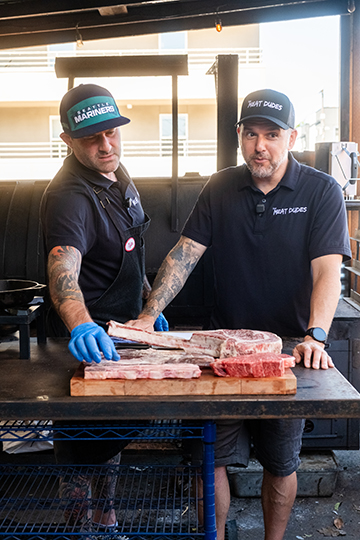
For a lot of people, the word “Wagyu” immediately brings to mind an insanely marbled piece of Japanese A5 beef.
That’s part of the Wagyu world, but it’s not the whole story.
Around the world, Wagyu producers are raising cattle differently based on their climate, available feed, local cattle breeds, consumer preferences, and the type of beef they’re trying to produce.
In southern Africa, for example, Deja explained that producers have used both Fullblood Wagyu genetics and crossbreeding with locally adapted cattle. Japanese Black arrived first in the region, with Akaushi becoming another part of the Wagyu industry later.
In England, Richard described an industry that has grown dramatically since he got involved in 2015. He said British Wagyu has grown to nearly 1,000 farmers with Wagyu cattle and has become the eighth-largest cattle breed in the United Kingdom.
That diversity is important because there isn’t one Wagyu steak everyone is supposed to like.
Some people might love an intensely marbled Fullblood steak. Someone else might prefer the beefier flavor and lower richness of an F1 cross. And someone else might discover that their favorite Wagyu steak isn’t a ribeye at all.
That’s the fun part.
What Makes Wagyu Beef Different?
If you’re trying to understand what is Wagyu beef, genetics are the place to start—but they aren’t the only thing that matters.
Wagyu cattle are known for their ability to develop intramuscular fat, or marbling. That marbling contributes to the tenderness, richness, and eating experience Wagyu is famous for.
But we think Wagyu gets really interesting when you stop looking only at the amount of marbling.
During our conversation, we talked about the importance of marbling fineness, flavor, feeding, environment, genetics, and how the animal was raised. Two steaks can both be Wagyu and give you completely different eating experiences.
We see this constantly as we cook beef from ranches across the United States.
A Wagyu steak from Florida can taste different from one raised in Washington or Texas. That’s one of the reasons we like tasting a ranch’s beef with nothing more than salt the first time we cook it.
We want to taste the beef.
Wagyu Doesn’t Have to Mean a $200 Ribeye
This might be one of the biggest misconceptions we want to change.
You do not need to buy an enormous, highly marbled ribeye to experience great Wagyu.
One of the topics we discussed with the World Wagyu Council was getting more value—and more great steaks—out of the entire animal.
Flat iron. Denver steak. Zabuton. Picanha. Bavette. Skirt steak. Flank. Top sirloin.
There are some incredible cuts that many consumers either haven’t heard of or overlook because they aren’t the big “Hollywood cuts.”
Deja called flat iron her favorite cut, while Richard talked about a restaurant concept in the UK that has built a Wagyu offering around shoulder cuts. We talked about doing the same thing at our butcher shop: introducing people to Wagyu cuts that can be significantly more approachable than a premium ribeye.
That’s a huge part of making Wagyu more accessible.
You don’t always need more expensive beef. Sometimes you just need to know which cut to buy.
Don’t Be Scared to Cook Wagyu
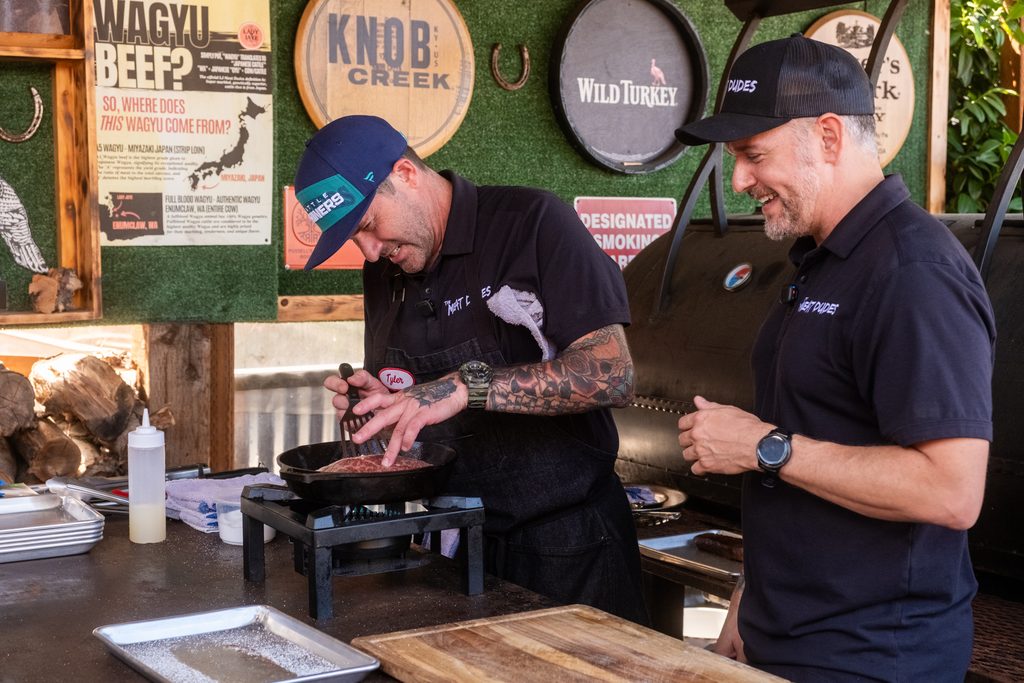
Another misconception: Wagyu is too expensive or delicate to cook at home.
We hear this ALL THE TIME.
People buy a beautiful Wagyu steak and suddenly become terrified they’re going to screw it up.
Don’t be.
Depending on the cut and level of marbling, Wagyu can actually be incredibly forgiving. In our conversation, we talked about flat iron being delicious across a surprisingly broad range of doneness and how educating people about unfamiliar cuts also means teaching them how to cook those cuts.
Our basic advice is pretty simple:
Pay attention to your heat. Use a thermometer. Get a great sear. And if you’re cooking heavily marbled Wagyu over an open flame, don’t walk away from it—the rendered fat can create flare-ups quickly.
Most importantly, cook your Wagyu the way YOU like to eat steak.
There isn’t a Wagyu police department coming to your house.
Is Wagyu Beef Healthy?
This is another subject where we think it’s important not to make ridiculous claims.
Wagyu is still beef. Eating Wagyu isn’t some magic trick that’s going to make you live forever.
But the composition of Wagyu fat is interesting enough that the World Wagyu Council brought together researchers to review decades of research into Wagyu beef, including work examining its fatty-acid profile and nutritional characteristics.
Richard specifically emphasized that they wanted the resulting health-benefits project to be grounded in research rather than exaggerated marketing claims, and that Wagyu should be discussed as part of a balanced diet.
That distinction matters to us.
“Wagyu has a lot of fat, therefore Wagyu is bad for you” is too simplistic.
So is “Wagyu is healthy, therefore eat unlimited Wagyu.”
The science is more interesting than either of those statements, and it’s something we’ll continue digging into with researchers and Wagyu producers.
Wagyu Is Becoming a Global Beef
So, what is Wagyu beef today?
It’s no longer a conversation happening in only one country.
The World Wagyu Council began with five countries collaborating and sharing information. Richard told us that it has since expanded to 15 countries, representing farmers and Wagyu cattle across multiple continents.
Different countries are at different stages. They’re using different genetics, different production systems, different grading systems, and different culinary traditions.
And we think that’s pretty damn cool.
Because the goal shouldn’t be for every Wagyu steak in the world to taste exactly the same.
We want to understand why they’re different.
Why We’re Building the Meat Dudes Approved Wagyu Map
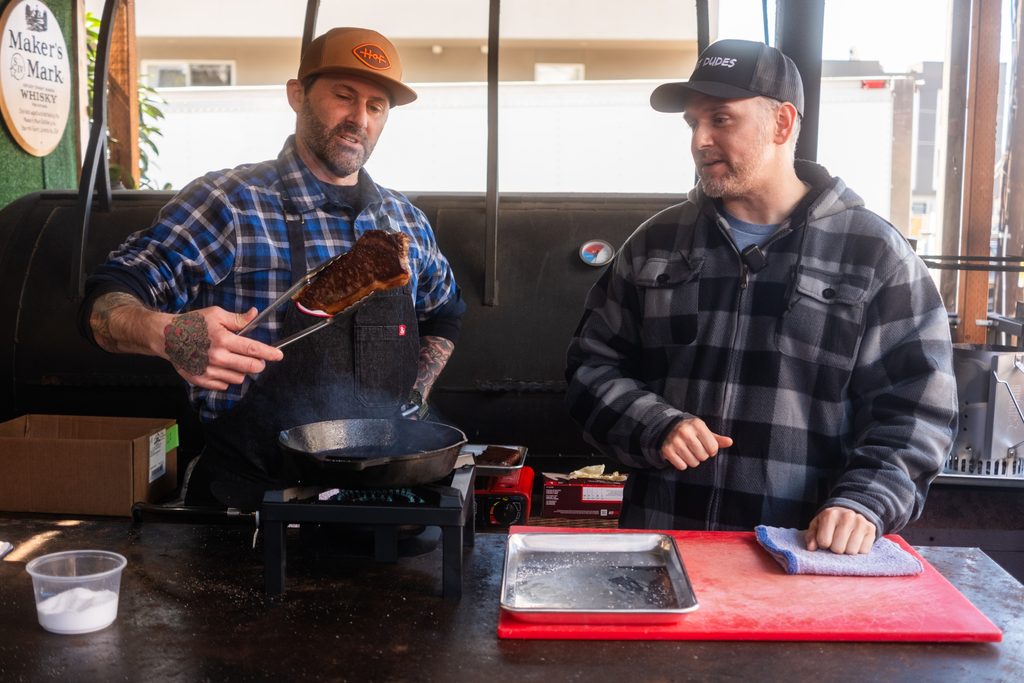
We’re cooking our way through Wagyu ranches across the United States, tasting their beef and learning about the ranchers behind it.
We’re cooking multiple cuts from each ranch and creating videos showing people what the beef looks like, how we cook it, and how you can cook it at home.
The idea is pretty simple.
We want someone who’s curious about Wagyu to be able to find a ranch, learn about its beef, watch us cook it, and feel confident enough to order something they’ve never tried before.
Maybe that’s a Fullblood NY Strip.
Maybe it’s an F1 Denver steak.
Maybe it’s a Wagyu top sirloin that costs a fraction of what you thought you’d have to spend to try Wagyu.
That’s the point.
There isn’t one correct Wagyu.
Wagyu Is a Spectrum
After years of eating Wagyu and talking with ranchers, chefs, meat scientists, breeders, and Wagyu organizations around the world, we keep coming back to the same idea:
Different genetics. Different ranches. Different climates. Different feed. Different levels of marbling. Different cuts. Different price points. Different ways to cook it.
You don’t need to understand all of that before buying your first Wagyu steak.
You just need to start exploring.
We’ll handle the meat nerd stuff.
It’s just better beef.