

What happens when 14 of the best American Wagyu ribeyes from across the country show up in Oklahoma City to compete for the title of Best Wagyu Steak in America? You cook every one of them in cast iron, with no seasoning (JUST SALT), put them in front of six judges and let the beef speak for itself.
That was our assignment when the American Wagyu Association invited The Meat Dudes to its 2026 Annual Conference, “Born to Be Prime,” held September 9–12 in Oklahoma City and headlined by sponsor Genesis Enterprises.
The AWA asked us to do something we take very seriously: help host, cook and judge its annual steak competition.
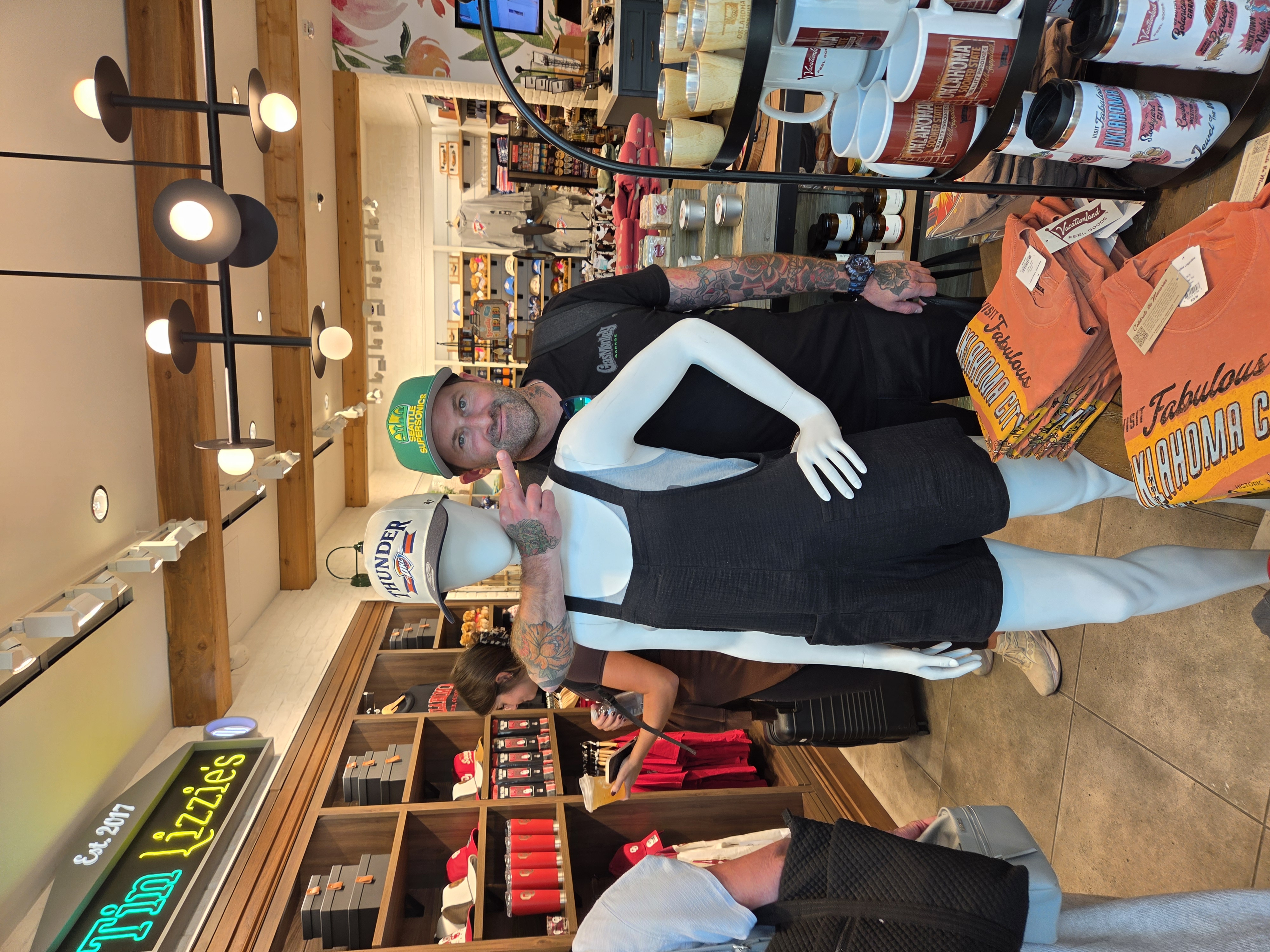
So naturally, we packed our Seattle SuperSonics gear and headed to Oklahoma.
Getting to Oklahoma City Was the First Challenge
We left Seattle on Thursday, September 10, expecting to arrive with plenty of time to get settled.
That did not happen.
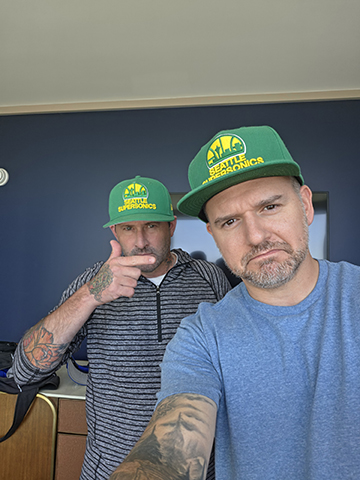
After multiple layovers and missed connections, we finally rolled into Oklahoma City on Friday morning. A little tired, definitely hungry, and of course representing Seattle in our Sonics gear, we headed down to the conference floor.

Almost immediately, we realized how special this weekend was going to be.
Over the past several years, we’ve cooked Wagyu from ranches across the country, talked with producers, toured farms and learned as much as we possibly can about American Wagyu. Now, with the Meat Dudes Approved Wagyu Map, we’re trying to bring those experiences together and help consumers discover the incredible Wagyu being raised across the United States.
Walking through the AWA conference, we were surprised—and honored—to see so many ranches participating in the Meat Dudes Approved Wagyu Map.
We talk with these ranchers on the phone. We cook their beef. We interview them. We tell their stories.
But getting everyone together in the same room and talking Wagyu face-to-face was something different.
Teaching People How to Cook Wagyu
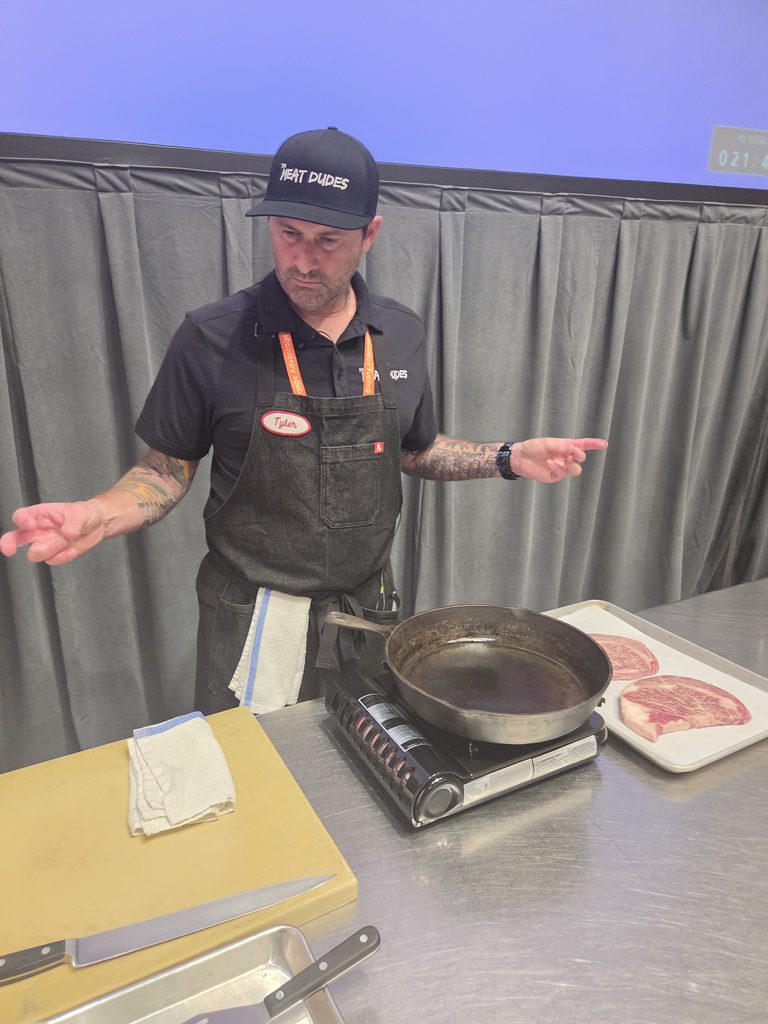
That evening, we got to do something that has become one of the most important parts of what we do: teach people how to cook Wagyu beef.
We believe one of the biggest roadblocks facing the Wagyu industry isn’t the quality of the beef.
It’s intimidation.
Consumers see all that marbling and immediately think they need a culinary degree to cook it properly. They don’t.
Wagyu is different, and you have to respect the fat and manage your heat, but cooking a great Wagyu steak doesn’t need to be complicated.
Getting to demonstrate that in front of a room filled with Wagyu producers was an incredible opportunity—especially with Reid Martin of Lone Mountain Wagyu, winner of the previous year’s competition, helping us out.
Our message was the same one we give consumers:
Don’t be scared of Wagyu.
Understand what you’re cooking, control your heat and let great beef do the work.
How Do You Judge 14 Incredible Wagyu Ribeyes?
After the cooking demonstration, it was time to get serious.
Fourteen Wagyu ribeyes had been submitted from producers around the country for the Best Wagyu Steak in America competition, and before we could taste them, we needed to evaluate the steaks themselves.
For that, we worked alongside Dr. Phil Bass of the University of Idaho—who at this point deserves the title of Honorary Meat Dude.
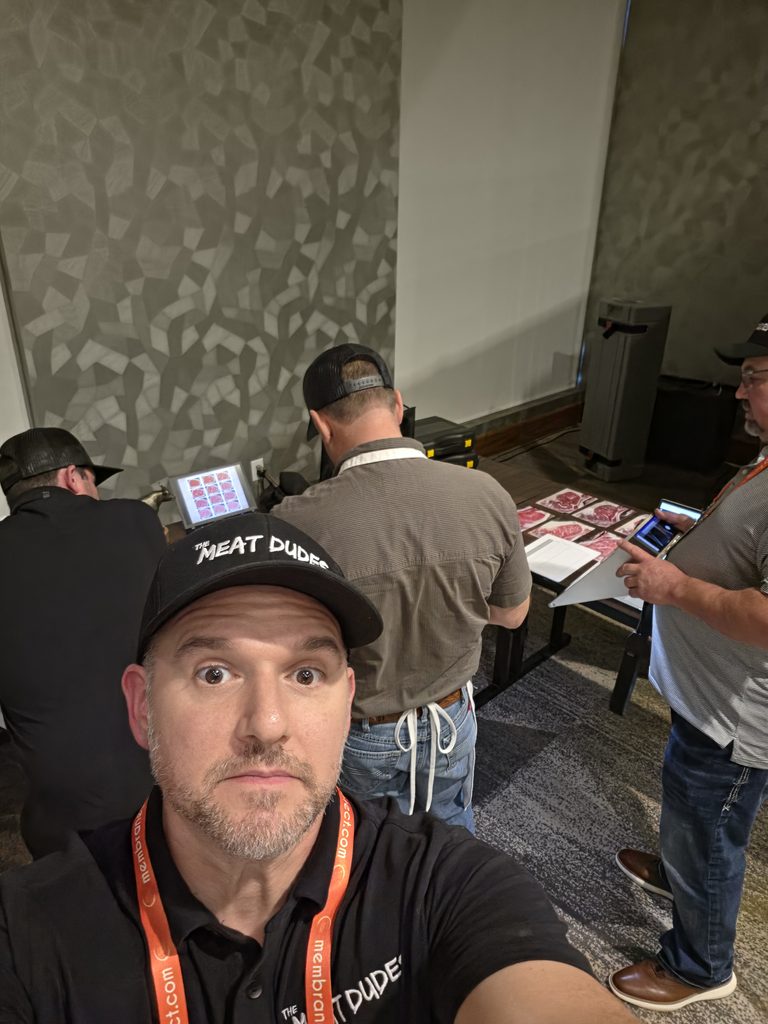
Dr. Bass brought the science.
Using his ribeye-area chart, we measured the size of each ribeye. We used Beef Marbling Standard charts to visually evaluate marbling, and the steaks were also analyzed using MIJ and MEQ technology.
The MIJ camera uses digital image analysis of the exposed ribeye to objectively evaluate characteristics such as marbling and ribeye area. MEQ technology provides another objective measurement of marbling and intramuscular fat. Together with traditional visual evaluation and physical measurements, these tools gave us another layer of objective data instead of relying entirely on what our eyes told us.
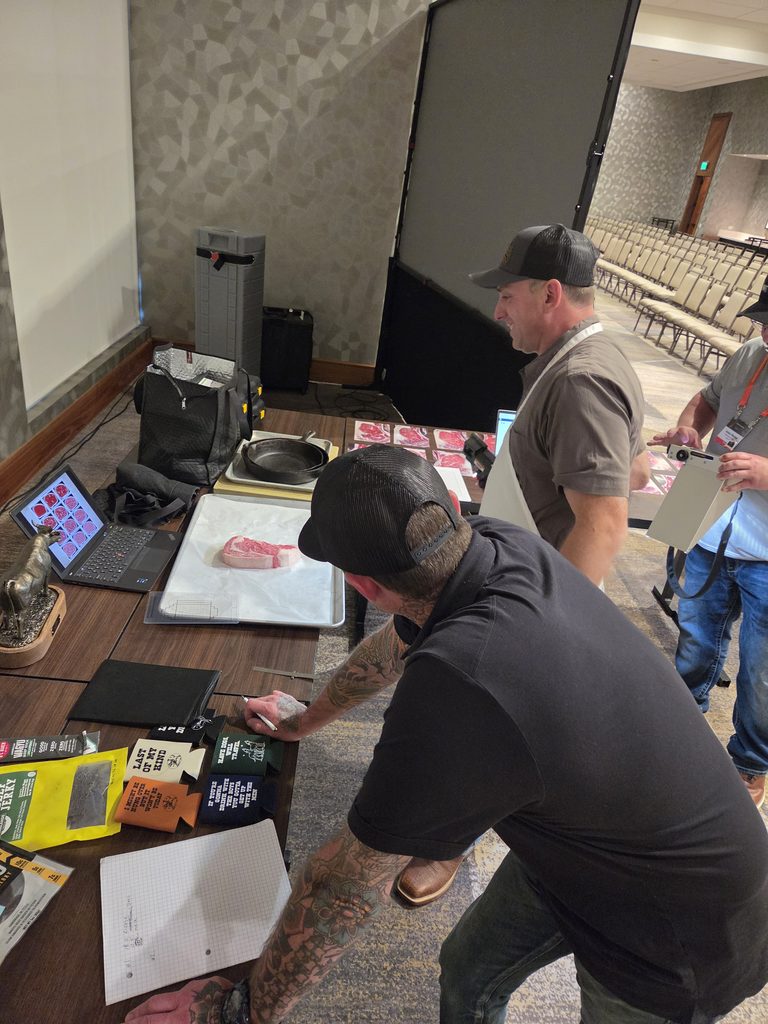
And our eyes were already telling us something pretty crazy.
These steaks were absolutely loaded with marbling.
The Competition by the Numbers
Across all 14 entries:
- Average Ribeye Area: 14.19 square inches
- Average BMS: 11.42
- Average MEQ Marbling Score: 1,115
- Average MIJ – DMP: 52.31%
Think about that BMS number for a second.
The average steak in this competition graded at a BMS 11.42 on the commonly used 1–12 Beef Marbling Standard scale.
Not the winner.
The average.
That gives you an idea of the level of American Wagyu beef sitting on the table in front of us.
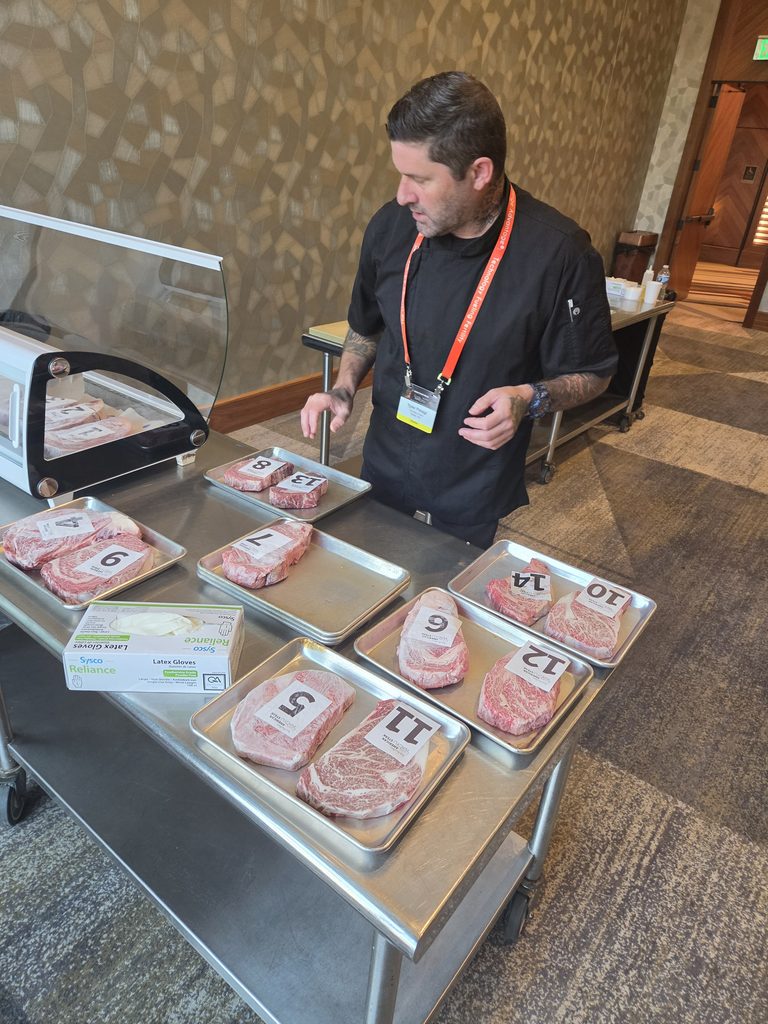
Then We Had to Eat Them
Tough job. Somebody had to do it.
Early Saturday morning, Chef Tyler fired up the cast iron and we started the tasting portion of the competition.
The format was a head-to-head bracket.
Each steak had already received an overall ranking based on the objective measurements, which determined its seeding. Higher seeds had an advantage in the bracket, but once the steaks hit the pan, a lower seed could absolutely knock them out.
Chef Tyler cooked every steak individually in cast iron under the same conditions.
No seasoning. Just salt.
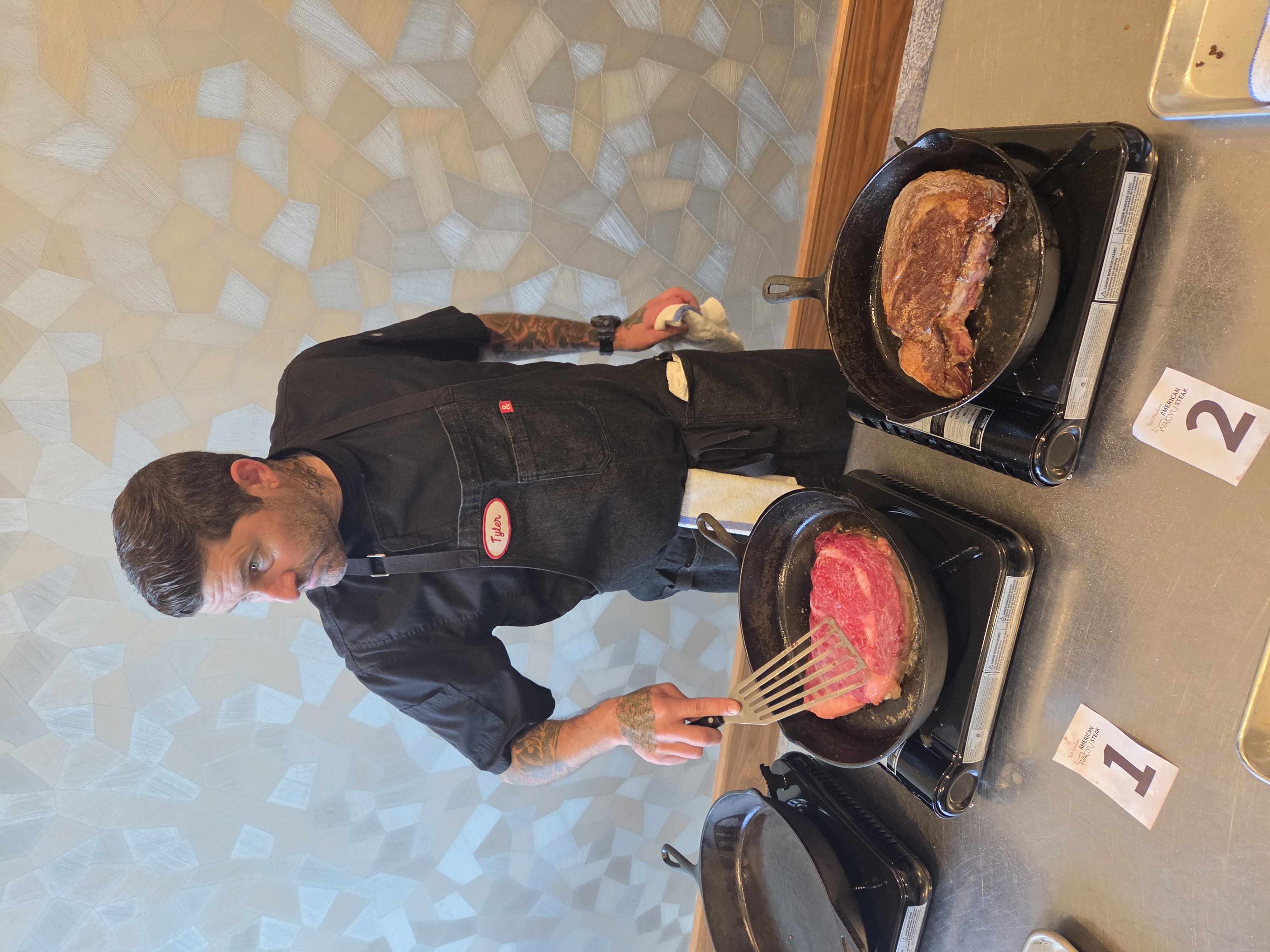
That was important. We weren’t trying to see who could make the best seasoned steak. We wanted to taste the beef.
Six official judges compared the steaks head-to-head, evaluating characteristics including aroma, tenderness, richness and beef flavor.
And this is where the competition really surprised us.
American Wagyu Isn’t Forgetting About Flavor
We expected marbling.
We expected tenderness.
We expected richness.
What impressed us most was the flavor.
These steaks didn’t simply taste like fat. They had character. Deep beef flavor. Savory intensity. Minerality. Umami. Roasted, nutty notes. Long finishes. And enough richness to remind you that you were eating something very different from an everyday steak.
That’s an important distinction.
There can be a perception that Wagyu is simply a race to create more marbling.
What we tasted in Oklahoma City told a much more interesting story.
American Wagyu producers aren’t forgetting about flavor.
These ranchers are producing beef that can be incredibly marbled while still delivering the savory, deeply beefy flavor that makes you want another bite.
That might have been our biggest takeaway from the entire competition.
Fourteen Became Eight. Eight Became Four.
Round one meant cooking all 14 steaks.
The winners advanced.
Then Chef Tyler did it all over again, cooking the second steak submitted by each advancing ranch so we weren’t simply judging the exact same piece of beef twice.
Eventually, the field narrowed to four.
Then two.
And finally, after a lot of tasting and serious deliberation, we had the Best Wagyu Steak in America.
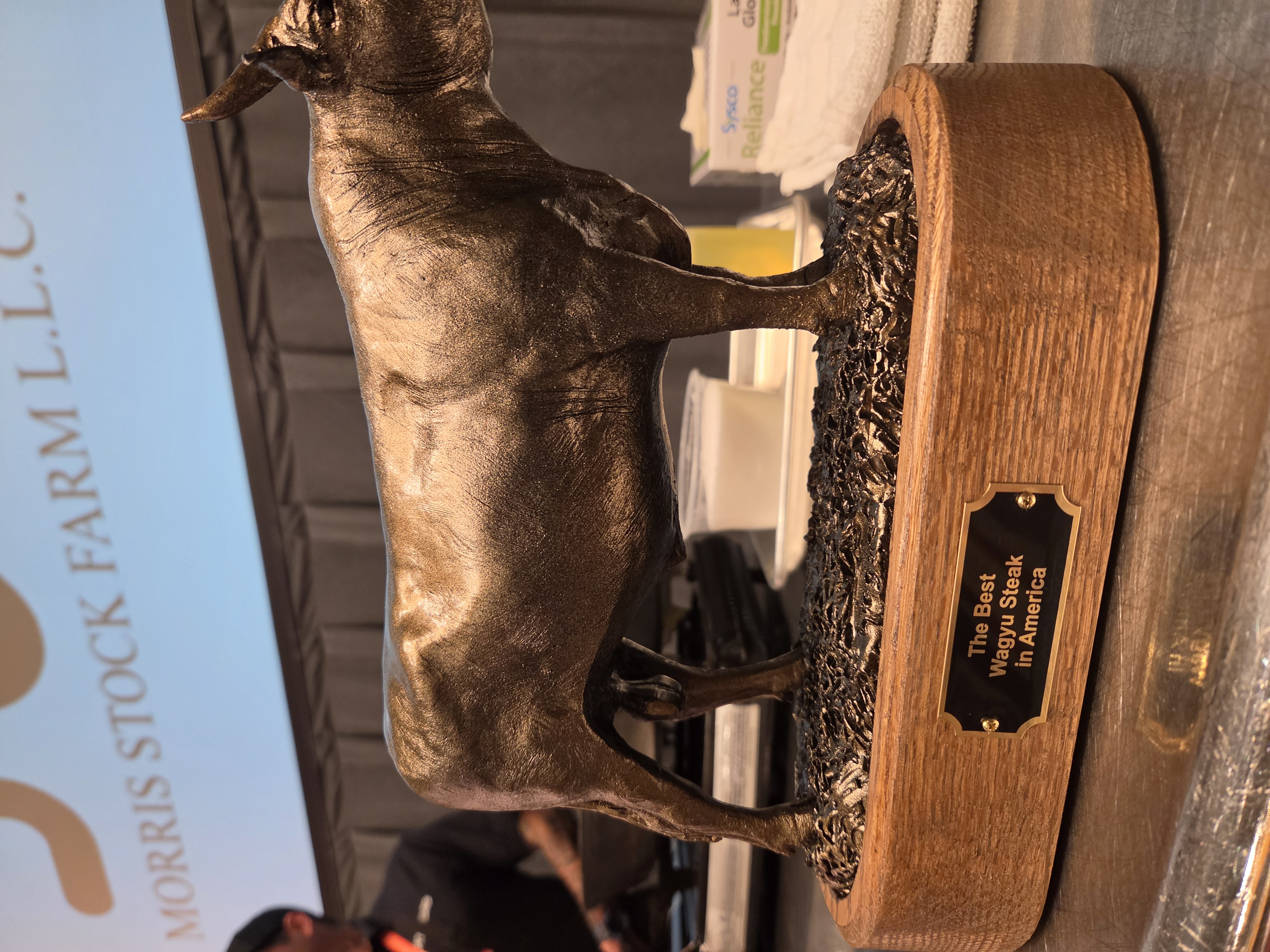
2026 Best Wagyu Steak in America Results
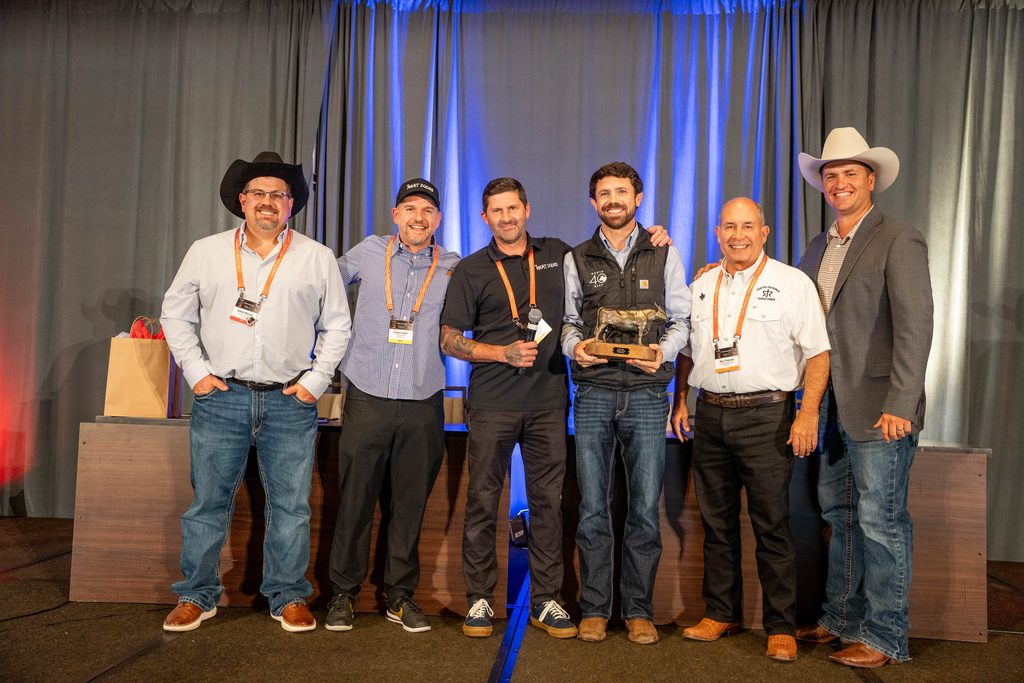
1st Place — North 40 Beef
2nd Place — Plum Creek Wagyu
3rd Place — Booth Creek Wagyu
4th Place — Santos Patronos
Congratulations to all four ranches—and honestly, to every producer who put a steak on that table.
The quality across the entire field was remarkable.
“American Wagyu Is Fake”
We’ve heard this one a few times.
After eating 14 of the best American Wagyu ribeyes in the country, we’re comfortable saying this:
Come taste the beef.
American Wagyu isn’t trying to be Japanese A5. It doesn’t need to be.
Different genetics, different ranches, different feeding programs and different production philosophies create different eating experiences. That’s part of what makes Wagyu so interesting—and it’s exactly why we’re building the Meat Dudes Approved Wagyu Map.
The beef we tasted at the American Wagyu Association Conference was some of the most highly marbled, tender and flavorful beef we’ve ever eaten.
Anyone who dismisses American Wagyu as “fake Wagyu” is missing a pretty incredible story happening right here in the United States.
More Than a Steak Competition
The 2026 American Wagyu Association Conference wasn’t only about the contest.
“Born to Be Prime” brought producers and industry experts together to discuss genetics, DNA technology, selection indexes, artificial intelligence, camera grading, food safety, branded beef programs, marketing and where the American Wagyu industry goes next.
For us, the best part was getting to spend time with the people behind the beef.
We spend a lot of time talking about Wagyu genetics, BMS scores, marbling percentages and cooking techniques. But ultimately, there are families, ranchers and producers behind every steak we cook.
Getting to meet more of those people is exactly why trips like this matter.
The conference wrapped Saturday night with the Gala Dinner and awards ceremony, where the competition winners were officially recognized.
Then, after an absolutely ridiculous amount of Wagyu, it was finally time for The Meat Dudes to head back to Seattle.
An Honor We Don’t Take Lightly
Being asked by the American Wagyu Association to help judge the Best Wagyu Steak in America was an honor.
We also understand the responsibility that comes with it.
Ranchers spend years making breeding decisions, improving genetics, dialing in feeding programs and raising these animals. There is an enormous amount of work represented by every steak entered into a competition like this.
When we’re asked to judge that work, we want to give it the seriousness and professionalism it deserves.
That means objective measurements when they’re available. Consistent cooking. Blind head-to-head tasting. Thoughtful judging. And, most importantly, respect for the people who produced the beef.
We’re still students of Wagyu. We probably always will be.
But the more ranches we visit, the more producers we meet and the more American Wagyu we cook, the more excited we get about where this industry is headed.
If Oklahoma City showed us anything, it’s that American Wagyu is producing some absolutely world-class beef.
And we’re going to keep tasting it.
Wagyu. It’s just better beef.
Also, Sonics for life.