

The biggest misconception in the beef world right now is simple: people think Wagyu is either ultra-expensive A5 from Japan… or it’s fake.
The truth is, Wagyu is a spectrum—and once you understand that, everything about buying, cooking, and enjoying Wagyu starts to make a lot more sense.
The A5 Problem: Why People Get Confused
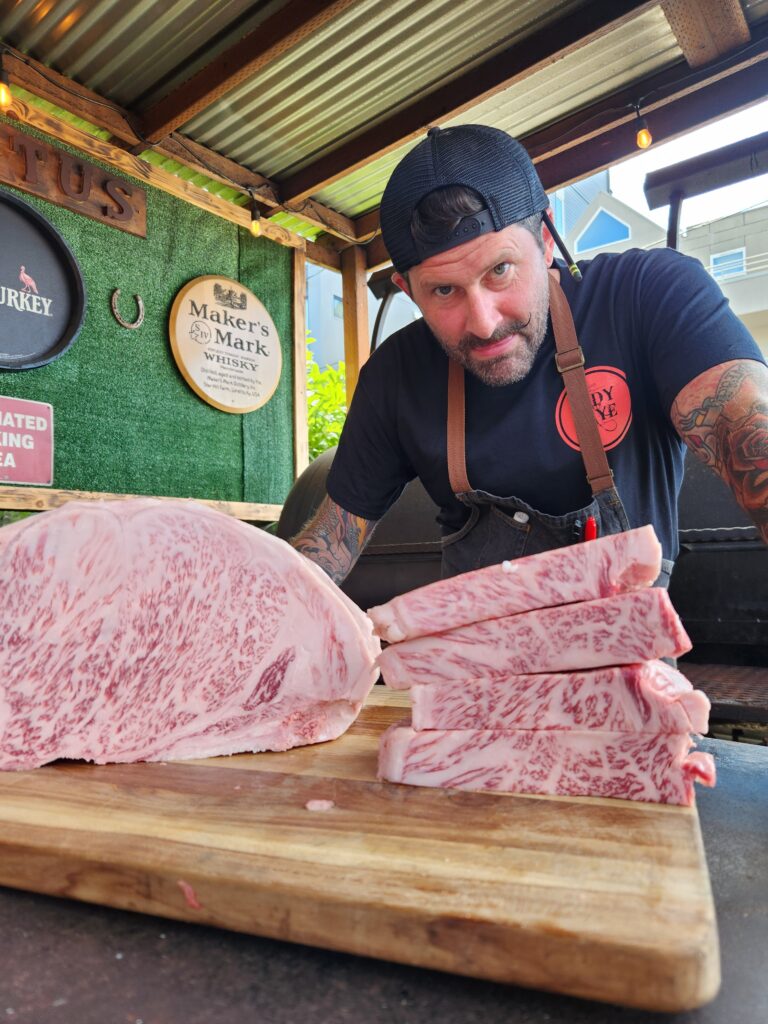
When most people hear “Wagyu,” they picture a $200 steak—beautiful, heavily marbled, thin slices of Japanese A5 served at a high-end restaurant.
And yes, that exists. A5 Japanese Wagyu is one of the most luxurious eating experiences in the world.
But that’s just one end of the spectrum.
On the other end, you’ll hear people say American Wagyu isn’t real or that anything that isn’t A5 is somehow inferior. That’s where the confusion starts.
Because the reality is: Wagyu isn’t one thing—it’s many things.
The Wagyu Spectrum: From A5 to F1 Cross
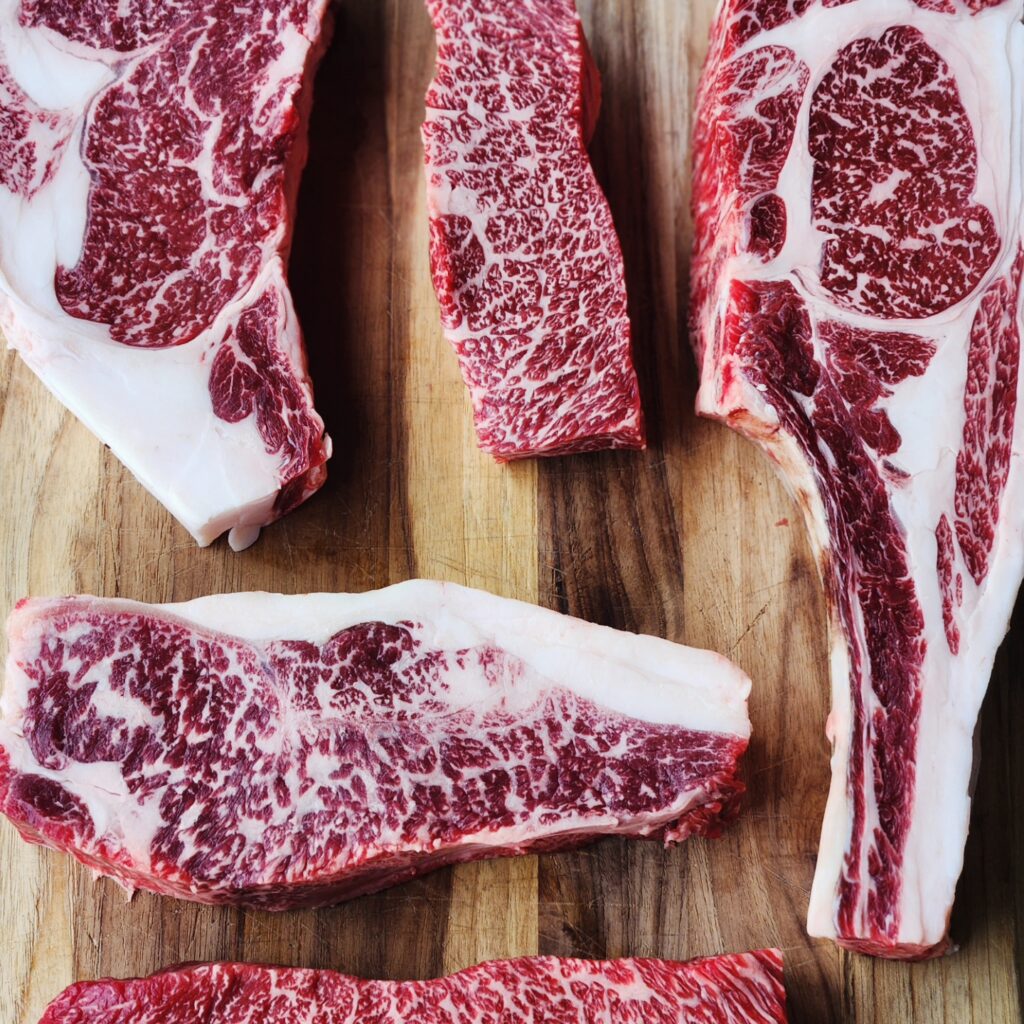
Once you zoom out, you start to see the range:
- A5 Japanese Wagyu – The highest level of marbling, rich, luxurious, and often served in smaller portions
- Full Blood Wagyu – 100% Wagyu genetics, raised outside Japan but still capable of incredible marbling
- Purebred Wagyu – ~93.75% Wagyu genetics, slightly less intense but still premium quality
- F1 Cross Wagyu – 50% Wagyu, typically crossed with Angus, offering a balance of marbling and beef-forward flavor
This is why we say Wagyu is a spectrum—you’re not choosing between “real” and “fake,” you’re choosing between different eating experiences.
Some people want the richness of A5.
Others want a steak they can eat a whole 12oz of.
Both are right.
Not All Wagyu Is the Same Breed
Here’s where it gets even more interesting.
Even within Wagyu, there are different breeds:
- Japanese Black – Known for intense marbling and that classic buttery Wagyu texture
- Japanese Red (Akaushi) – Slightly leaner, with a stronger beef-forward flavor and unique fat profile
Most Wagyu you see in the U.S. is Japanese Black or a cross involving it. But Akaushi is growing—and it brings a completely different style to the table.
So now you’re not just choosing a “type” of Wagyu—you’re choosing a breed, flavor profile, and experience.
Again… Wagyu is a spectrum.
It’s Not Just Ribeye: The Cut Matters Too
Another big myth?
That Wagyu only matters when you’re talking about ribeyes, strips, or tenderloins.
That couldn’t be further from the truth.
One of the best parts of Wagyu is that it creates more steakable cuts across the entire animal.
Instead of spending $150–$200 per pound on a ribeye, you could be eating:
- A Full Blood Denver steak with insane marbling
- A Purebred New York strip with perfect balance
- A Japanese Black / Akaushi cross bavette that eats like a premium steak
- A Wagyu flat iron or teres major that rivals high-end cuts
These “non-Hollywood cuts” are where Wagyu really shines.
They’re more affordable.
They’re packed with flavor.
And they completely change how you think about buying beef.
Why Wagyu Is a Spectrum Matters for You
Understanding that Wagyu is a spectrum does a few important things:
- It makes Wagyu approachable
You don’t need to spend $200 to have an incredible Wagyu experience. - It gives you options
Different genetics, breeds, and cuts mean you can find what YOU like. - It makes you a smarter buyer
Instead of chasing labels, you start asking better questions:
- What type of Wagyu is this?
- What breed is it?
- Where is it from?
- What cut am I buying?
- It supports better producers
When consumers understand the spectrum, they start valuing transparency and quality—not just hype.
Final Thought: Stop Thinking “A5 or Nothing”
A5 is incredible. No question.
But it’s not the only way to experience Wagyu—and for most people, it’s not even the best everyday option.
A great F1 ribeye, a full blood Denver, or a well-raised Full Blood Akaushi bavette can deliver an experience that’s just as exciting in a completely different way.
So next time you see Wagyu, don’t ask:
“Is this real?”
Ask:
“Where does this fall on the spectrum?”
Because once you understand that… You’ll never look at beef the same way again.