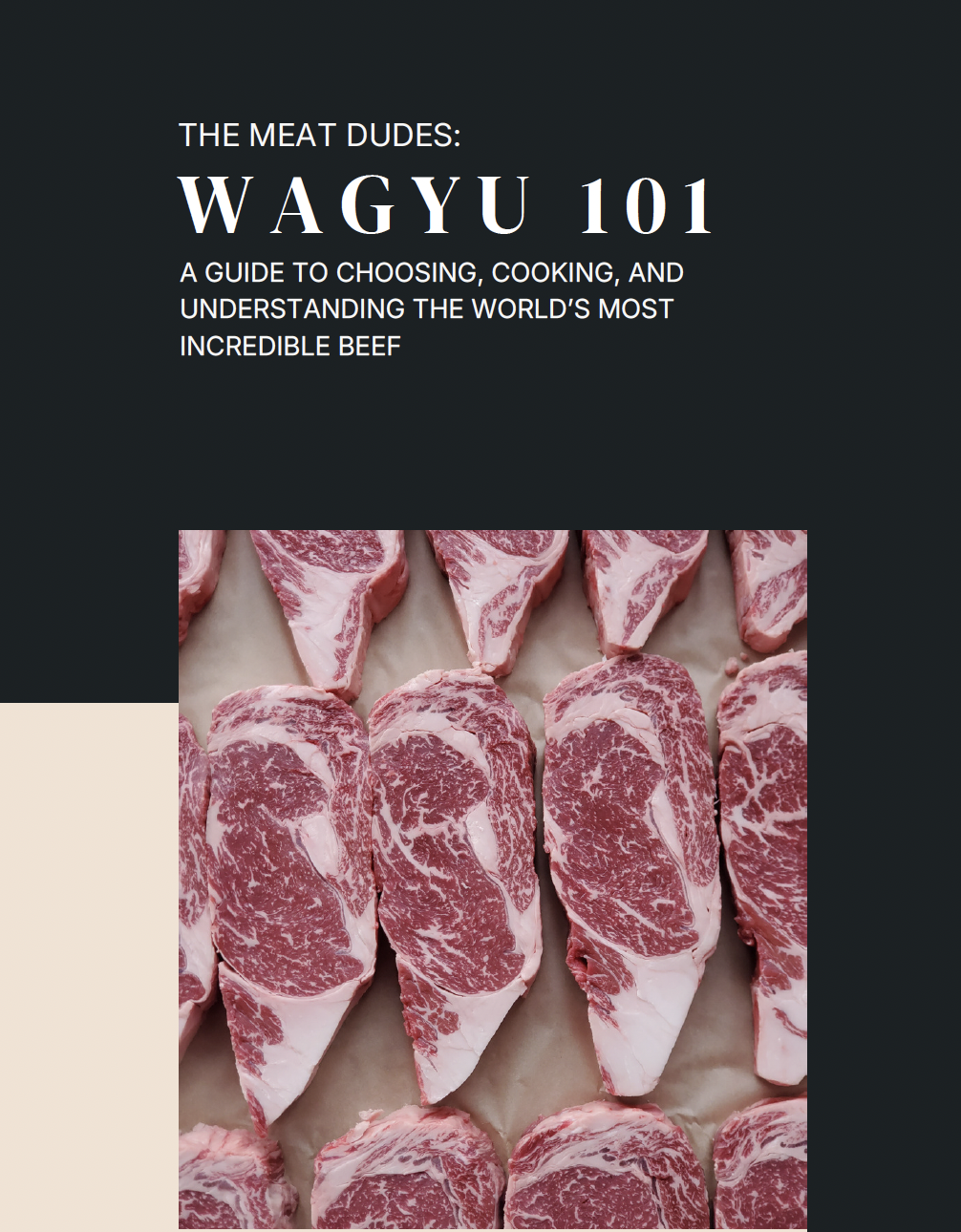


If you’ve ever searched for answers to common wagyu beef questions like “What is Wagyu?” or “Is American Wagyu fake?” or “Why is Wagyu so expensive?” you’re not alone. Wagyu beef is one of the most misunderstood foods in the world. Some people think it’s just Japanese A5. Some think it’s fake. Some think it’s overpriced hype.
We talk to Wagyu ranchers across the U.S., Japan, Australia, and South America — and we’re here to clear this up.
Let’s answer the top 10 Wagyu beef questions.
1. What Is Wagyu?
Wagyu is beef from cattle that originated in Japan and are genetically predisposed to produce higher levels of intramuscular fat — also known as marbling.
That marbling is what makes Wagyu:
• More tender
• More juicy
• More flavorful
It’s not about “fatty beef.” It’s about fat inside the muscle, evenly distributed, which melts during cooking and creates that buttery texture.
And here’s the important part:
Wagyu is not one thing. It’s a spectrum.
From F1 crosses to full-blood American Wagyu to Japanese A5, there are different levels, percentages, and eating experiences.
2. Is Wagyu Healthier Than Regular Beef?
Many people consider Wagyu healthier than conventional beef because the fat profile is different.
Wagyu fat is higher in monounsaturated fat — the same type of fat found in:
• Olive oil
• Salmon
• Avocados
It also tends to have a better omega-6 to omega-3 balance compared to conventional grain-finished beef.
That’s why Wagyu feels rich but finishes clean. The fat melts at a lower temperature and doesn’t sit heavy.
Is it a health food? No.
Is the fat composition different? Yes.
And that difference matters.
3. Does the Percentage of Wagyu Matter?
Technically? Yes.
Practically? It depends on what you’re looking for.
A 50% Wagyu (F1 cross) will:
• Look like an incredible USDA Prime steak
• Have great marbling
• Be more “beef-forward”
A higher-percentage Wagyu (Purebred or Full Blood) will:
• Have finer marbling
• Be richer
• Lean more into that buttery experience
Japanese A5 can reach 40–50% fat-to-meat ratio.
The key isn’t the percentage — it’s transparency. The label should clearly tell you what you’re buying so you can choose what fits your taste.
4. Is Kobe Wagyu?
Yes — but not all Wagyu is Kobe.
Just like:
All Champagne is sparkling wine, but not all sparkling wine is Champagne.
Kobe beef is Wagyu raised under extremely strict standards in the Hyogo Prefecture of Japan.
It must meet specific:
• Breed requirements
• Grading requirements
• Regional requirements
So yes, Kobe is Wagyu.
But Wagyu is much broader than Kobe.
5. Why Is Wagyu So Expensive?
Three main reasons:
- Genetics cost more
- Cattle are raised longer
- Feeding programs are extended and more intensive
Wagyu is a premium product. It takes longer to produce and requires more management.
But here’s what most people miss:
You don’t have to spend $200 per pound.
There are amazing Wagyu cuts in the $15–$30 range that will absolutely blow your mind.
Again — spectrum.
6. Is American Wagyu Real?
Yes.
American Wagyu is Wagyu genetics raised in the United States.
If the cattle carry Wagyu genetics, it’s Wagyu. Geography doesn’t change DNA.
In the U.S., you’ll commonly see:
• F1 (50% Wagyu x Angus)
• Purebred (93.75% Wagyu)
• Full Blood (100% Wagyu genetics)
American Wagyu often exists because American consumers want:
• A full steak
• More beefiness
• Slightly less extreme richness than Japanese A5
It’s not fake. It’s adapted.
7. What’s the Difference Between Japanese, American, and Australian Wagyu?
Same genetics. Different environments.
Different:
• Climate
• Feeding programs
• Consumer preferences
• Finishing systems
Just like wine tastes different depending on region, Wagyu reflects its terroir.
Japanese Wagyu is typically ultra-rich and eaten in small portions.
American Wagyu often balances marbling with steakhouse-style eating.
Australian Wagyu has built large-scale, highly consistent programs.
It’s not about “better.” It’s about different.
8. How Much Marbling Is Actually Enjoyable?
That depends on you.
Some people love 2–3 ounces of Japanese A5 and feel satisfied.
Others want a full 12–16 oz steak with great marbling but still some structure.
The beauty of Wagyu is that there’s an option for both.
You don’t have to chase A5 to enjoy Wagyu.
9. What’s the Best First Wagyu Cut to Try?
Zabuton (Denver steak).
Hands down.
It’s:
• Extremely well marbled
• Usually affordable
• Around $20–$30
• Easy to cook
Sear it in cast iron. Salt and pepper. Let it rest. Slice against the grain.
That’s how you fall in love with Wagyu.
10. Can You Grill Wagyu?
Yes — but you need to watch it.
Wagyu fat melts at a lower temperature. If you throw it on a hot gas grill and walk away, it can flare up fast.
If grilling:
• Keep the heat controlled
• Watch for flare-ups
• Move the steak as needed
For beginners? Cast iron is safer and easier.
Medium-high heat. Wagyu tallow if you have it. Cook to about 125°F. Rest. Finish with flaky salt.
Simple wins.
Final Thoughts
Wagyu isn’t fake.
It isn’t just Japanese A5.
And it isn’t always crazy expensive.
It’s a spectrum of genetics, regions, feeding programs, and eating experiences.
Buy with intention.
Cook it properly.
Start with something approachable.
And if someone says they hate Wagyu?
Hand them a Zabuton.
Stay meat curious.