
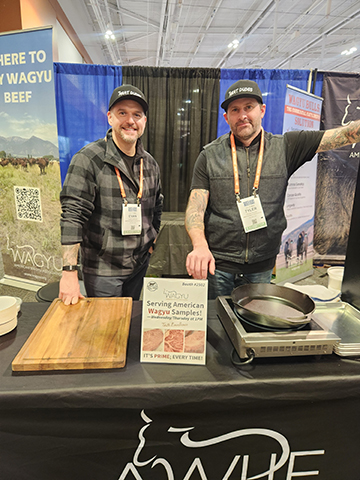
Last week, The Meat Dudes traveled to Nashville, Tennessee for CattleCon, the largest cattle industry convention in the United States. Alongside the American Wagyu Association, Chef Tyler and I cooked and served Wagyu beef to ranchers, producers, and industry professionals from all over the country. What we learned during that week confirmed something we’ve believed for a long time: the future of American Wagyu beef in the United States is just getting started.
CattleCon: The Biggest Cattle Event in the U.S.
CattleCon brings together thousands of ranchers, producers, and industry leaders from across the country. It’s where conversations about genetics, markets, sustainability, and the future of beef actually happen. Being there, cooking on Wagyu Row and representing American Wagyu, put us right in the middle of those conversations — and gave us a front-row seat to how people really think about Wagyu.
Most People Still Haven’t Tried Wagyu Beef
One of the biggest takeaways from CattleCon was how many people had never tried Wagyu beef before. Despite the buzz around Wagyu, it still represents only a very small percentage of the overall U.S. beef market. That means a huge number of consumers — and even ranchers — have never tasted it.
At Wagyu Row, we served steaks to old-school cowboys, young producers, business professionals, and lifelong cattle families. Many were trying Wagyu for the very first time. Nearly all of them loved it.

Changing Ranchers’ Minds in Real Time
We expected at least some pushback from traditional cattle producers. Instead, we saw open minds and genuine curiosity. Ranchers didn’t just enjoy the beef — they asked smart questions about genetics, feeding programs, and market demand.
Several ranchers told us on the spot that they planned to go home and explore crossing Wagyu genetics with their Angus herds. That was huge. Generational ranching traditions run deep, and decisions like that aren’t made lightly.
One of the most surprising moments came on our last night in Nashville, when an older rancher couple sought us out at dinner. They told us they had never eaten Wagyu before, but after tasting it at CattleCon, they were excited to introduce Wagyu genetics into their operation. That kind of shift doesn’t happen without something real behind it.
The Untapped Potential of F1 Cross Wagyu
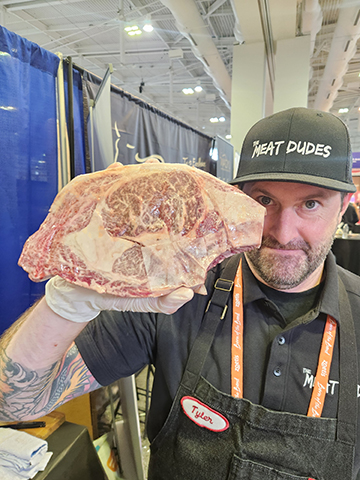
What became very clear is how much potential exists in F1 Cross Wagyu beef. Crossing Wagyu with Angus creates a product that fits the way Americans eat steak — beefy, balanced, and approachable — while still delivering exceptional marbling and flavor.
For many producers, F1 Cross Wagyu represents a realistic entry point into the Wagyu market. Based on the conversations we had, more ranchers are starting to see this as a natural evolution, not a replacement of what they’ve always done.
Breaking the Biggest Wagyu Myths
Another major lesson from CattleCon was just how misunderstood Wagyu beef still is. Many people believe Wagyu only means ultra-expensive Japanese A5 beef, or that it’s something they could never afford.
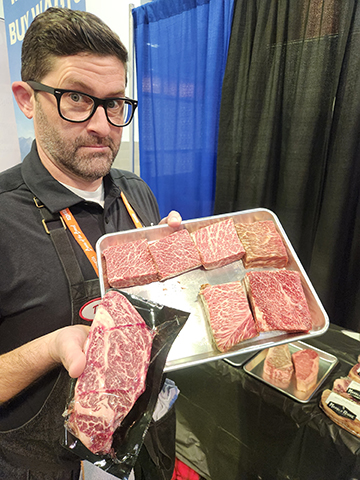
Once we explained that Wagyu is a spectrum — and showed people American Wagyu cuts priced between $18 and $35 — minds were blown. When Wagyu becomes understandable and accessible, it stops feeling intimidating and starts feeling exciting.
Where the Wagyu Industry Is Headed
What we saw at CattleCon aligns with broader industry trends. The global Wagyu beef market is projected to grow significantly over the next decade as demand for premium beef, traceability, and eating experience increases. Analysts estimate the global Wagyu market could exceed $40 billion by the early 2030s, with steady year-over-year growth.
In the U.S., demand for premium and specialty beef continues to outpace conventional beef growth, especially through direct-to-consumer models and independent ranchers. Education is driving demand — and once people taste Wagyu, they want more.
Why This Moment Feels Different
Beyond the data and projections, the energy at CattleCon was undeniable. Being surrounded by passionate Wagyu producers and forward-thinking ranchers reminded us why this industry is so special. Wagyu isn’t a trend — it’s an evolution of how beef can be raised, marketed, and enjoyed.
We left Nashville more confident than ever that American Wagyu beef in the United States is on the verge of real growth. Ranchers are paying attention. Consumers are curious. And The Meat Dudes are excited to be right in the middle of it — helping educate, tell the story, and shape where Wagyu goes next.