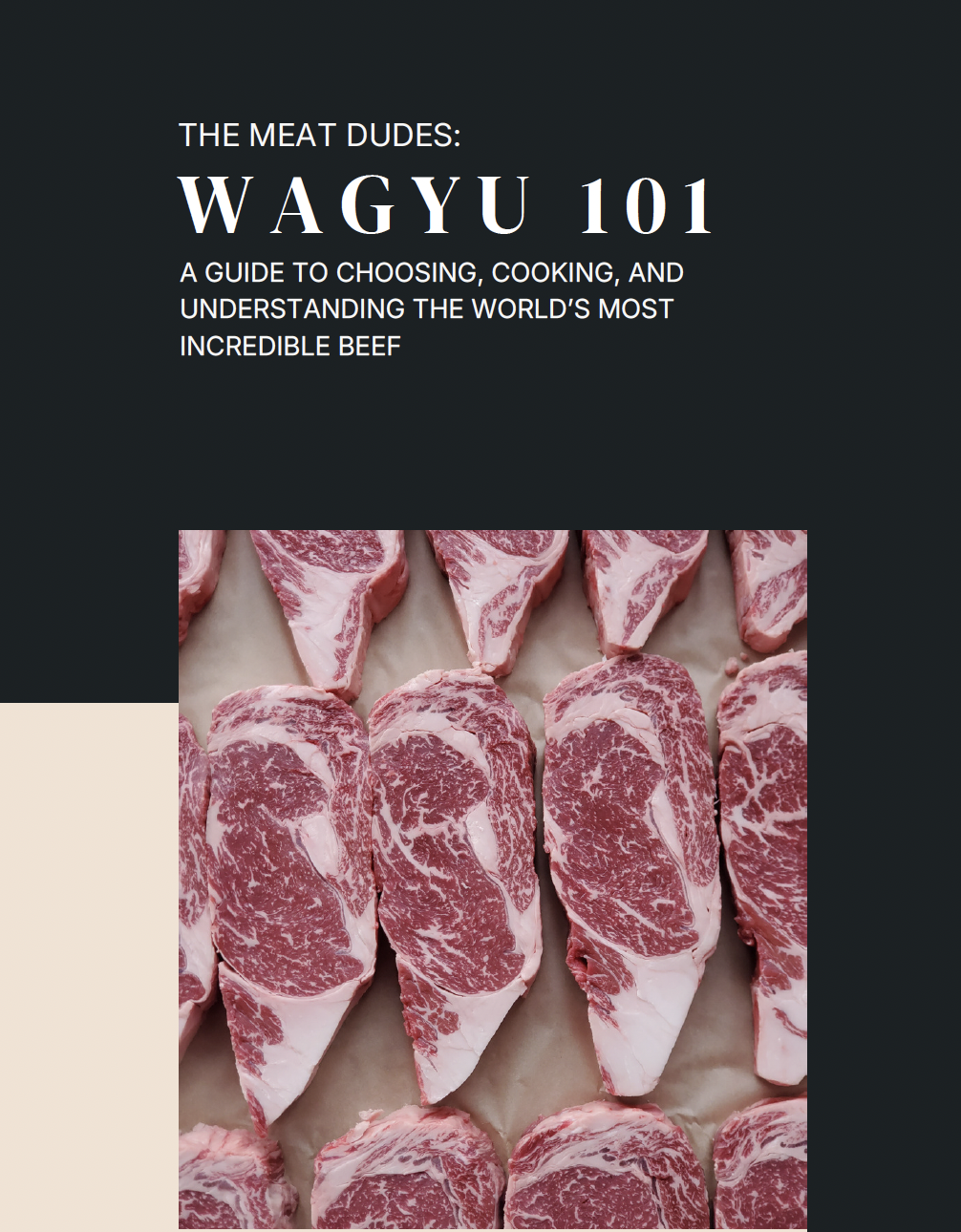

How Wagyu Beef Is Raised is something most people never think about—they just see a beautifully marbled steak and assume luxury, richness, and a higher price tag. But as we learned in our conversation with Jim Skartvedt of Renew Livestock Company and 5 Bar 1 Meat Company, that steak represents a three-year journey shaped by genetics, environment, animal care, and dozens of people working behind the scenes. If you’ve ever wanted to truly understand what makes Wagyu different, it starts with understanding how Wagyu beef is raised from conception to harvest.
The First Thing to Understand: Wagyu Begins With Genetics
Wagyu isn’t magic.
It’s biology + time + care.
Jim reminds us that the unique marbling Wagyu is famous for is genetically driven. These cattle are predisposed to lay down intramuscular fat—the “spiderweb” marbling that melts like butter and gives you that clean, luxurious mouthfeel.
But here’s the part that blew people’s minds:
Marbling traits start expressing in the embryo during the cow’s second trimester.
Yep. Before that calf ever stands up, the blueprint for marbling is already forming. Which means the cow must be healthy, well-fed, and low-stress while pregnant—otherwise marbling potential drops later.
This is why Wagyu isn’t just a finishing process…
It’s a from conception to harvest process.

50% Genetics, 50% Environment—And 100% Commitment
Jim breaks it down simply:
- 50% of marbling comes from genetics (great cows + great bulls)
- 50% comes from environment (low stress, proper feed, steady routines, good health)
Wagyu ranchers obsess over both.
These cattle need:
- consistent feeding
- clean water
- low-stress handling
- protection from harsh weather
- proper nutrition at every stage
- excellent transportation (seriously—bad trucking can wreck years of work)
It takes a village.
A quiet, hardworking, never-complaining village.
It Takes Three Years to Make a Wagyu Steak
A conventional beef animal might be harvested around 14–18 months.
A Wagyu?
23–30 months is normal.
That means:
- 3 years of feeding
- 3 years of labor
- 3 years of weather, vet bills, pasture maintenance, supplements, hay, fuel, mineral, and stress
- 3 years of risk
And despite what some consumers believe, ranchers are not getting rich on this.
By the time that steak hits a restaurant or butcher shop:
- the rancher gets a small cut
- the feeder, trucker, processor, distributor, butcher, and retailer each take their slice
- the margins per pound are shockingly thin
Wagyu costs more not because it’s fancy… but because it takes triple the time and effort to produce.
Wagyu Fat: The Health Benefits Most People Don’t Expect
Many consumers still fear fat.
But Wagyu fat is different—it contains higher oleic acid, the same heart-healthy fat found in salmon and olive oil.
Jim sees this firsthand. He eats Wagyu regularly—and his doctor literally told him his blood pressure has never looked better.
The key message?
Wagyu is rich… but it’s also clean.
You eat less of it because it’s satisfying, flavorful, and nutrient-dense.
Why American Wagyu Matters
One part of our conversation hit especially hard:
Consumers still misunderstand American Wagyu.
Some people only trust Japanese A5…
Others think American Wagyu is “fake Wagyu”…
And most simply don’t understand the terminology.
Jim puts it plainly:
American Wagyu = Wagyu genetics raised in the U.S., typically crossed with Angus or dairy breeds.
F1 crosses (50/50) can yield:
- deeply beefy flavor
- high marbling
- lower cost
- greater accessibility
And often?
F1 Wagyu is what the American palate prefers.
You don’t need a $150 full-blood ribeye to enjoy Wagyu.
A Zabuton, flat iron, bavette, or chuck roast will blow your mind for half the price.
The Hard Truth: Wagyu Needs Transparency
One of the biggest issues in the U.S. Wagyu market is… confusion.
Consumers don’t know:
- what the labels mean
- where the meat came from
- what the genetics are
- how it was raised
That’s why programs like the Authentic Wagyu Program (launching in 2025 through the USDA + American Wagyu Association) will be a game changer.
For the first time, labels will require:
- DNA verification
- proven Wagyu lineage
- transparent breeding standards
This is how the industry gets better.
This is how consumers learn to trust Wagyu.
This is how we grow the category for everyone.
What People Should Know—but Usually Don’t
When asked what consumers absolutely need to understand, Jim said this:
“Wagyu takes three years, and every single step—from breeding to feeding to trucking to harvesting—involves people pulling in the same direction.”
It’s not just a steak.
It’s the result of:
- ranchers
- feedlots
- truckers
- processors
- graders
- butchers
- small business owners
- and endless hours of labor
Wagyu isn’t expensive…
It’s appropriately priced for the amount of work, time, and care involved.
The Future of Wagyu Is Bright—and It Starts With Education
More people are becoming health-conscious.
More are cooking at home.
More want to know where their food comes from.
More want to support independent ranchers.
Wagyu fits perfectly into all of that.
And with ranchers like Jim pushing for transparency, quality, and better consumer understanding, the next five to ten years of the Wagyu industry are going to be massive.
We’re here for it.
And we’re here to help explain it every step of the way.