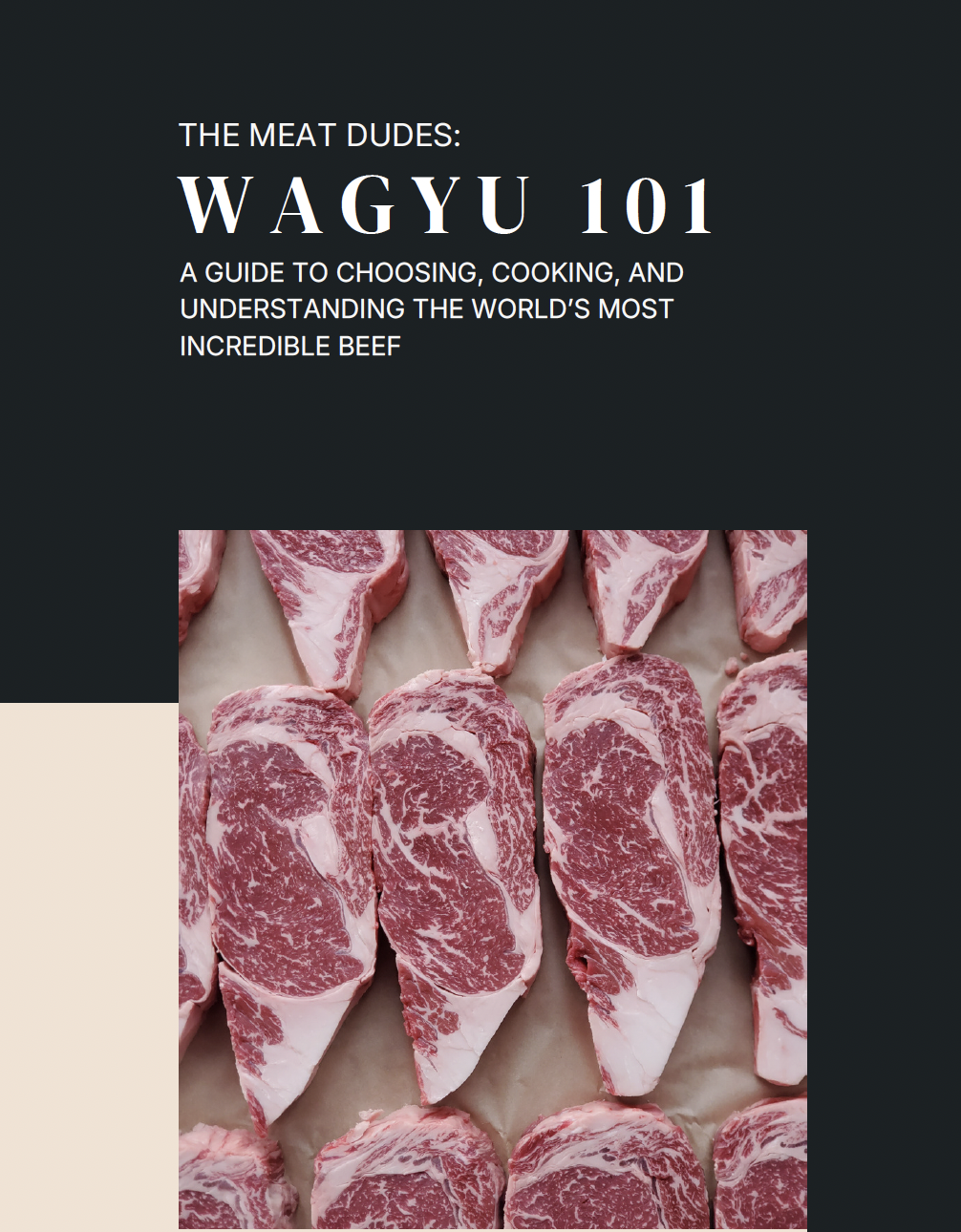


Trying Wagyu beef for the first time can be one of the best eating experiences of your life… or one of the most expensive letdowns. Too many people think the only way to “do it right” is to jump straight into a massive, $150–$200 A5 Japanese ribeye. Then they take three ounces, tap out, and wonder what all the hype is about.
Look—Wagyu is incredible. But there’s a right way to approach it for your very first time, and it’s not by going all-in on a giant A5 steak. This guide walks you through the method I recommend to everyone who wants to understand Wagyu, enjoy Wagyu, and not get crushed by Wagyu.
Let’s break it down.
Why You Shouldn’t Start With a Full A5 Steak
A5 Wagyu from Japan is rich—ridiculously rich. It’s intensely marbled, buttery, and luxurious, and because of that, it’s extremely filling. When you buy a whole A5 strip or ribeye for $150–$200, you’re buying far more richness than your palate is ready for.
Most first-timers hit their limit after a few bites.
They stop enjoying it, misunderstand the flavor profile, and walk away confused.
Instead of going big, go small.
Start with 2–3 ounces of A5. That’s all you need to understand its texture, mouthfeel, and flavor without overwhelming yourself.
This should only cost $20–$35, depending on your butcher. A small investment for a huge learning moment.
Step 1: Buy a Couple Ounces of A5 Wagyu
Find a butcher who actually knows where their Wagyu comes from—traceability matters, especially with high-end beef. Ask questions. Nerd out a little.
Then grab a small piece of A5, usually a couple ounces.
Your goal isn’t to eat a full A5 steak. Your goal is to experience A5.
That buttery, melting texture is unlike anything from conventional cattle. Some people describe it as beef-flavored butter. Some say it feels like it shouldn’t even exist.
You’ll understand it as soon as it hits your tongue.
But again—just a couple ounces. That’s the move.
Step 2: Choose Your “Gateway” Wagyu Steak
While your A5 gives you that once-in-a-lifetime richness, your first full Wagyu steak should be something you can actually finish. That’s where American F1 Cross Wagyu comes in.
F1 means:
50% Wagyu × 50% Angus (or other breeds like Hereford, Holstein, Jersey etc…)
It still has Wagyu genetics—so you’re getting great marbling, tenderness, and flavor—but it eats like a steak. That’s the key for first-timers. It’s familiar, approachable, and insanely delicious.
Skip the expensive “Hollywood cuts” like New York strips and ribeyes for now. Instead, look for these cuts:
- Ranch steak
- Zabuton (Denver cut)
- Teres major
- Top sirloin
- Flat iron
- Bavette
These cuts are packed with flavor, beautifully marbled in Wagyu cattle, and usually run $20–$35/lb depending on your butcher. They feed 1–2 people and deliver unreal value.
A ranch steak for $10–$12?
That’s one of the best deals in beef, period.
Step 3: Cook the A5 (The Simple, Correct Way)
A5 cooking is shockingly simple:
- Heat a cast iron pan to medium/medium-high.
- Lightly salt your A5.
- No oil, no butter—the Wagyu will make its own.
- Press it into the pan to start searing.
- Cook a couple minutes per side to medium-rare (120º–130º).
- Let it rest.
When you press it into the pan, you’ll see liquid fat instantly pooling. That’s the magic of A5. You’re cooking it in its own rendered fat, and it smells absolutely unreal.
Slice it thin. Finish with a touch of flaky salt. Share a few bites with whoever’s around you. That’s all you need.
Step 4: Cook Your F1 Cross American Wagyu Steak in the A5 Fat
This is where the experience becomes unforgettable.
Once your A5 is off the heat and resting, do not dump that rendered fat. That’s flavor gold.
Season your F1 Wagyu steak with salt and pepper and press that into the pan. Let it sear in the A5 fat for a few minutes per side. You’re looking for:
- A deep crust
- 128º internal temp for medium-rare
- Even browning all around
If your steak is thicker, you can finish it in the oven—but many of the cuts I recommend cook beautifully right on the stovetop.
Once it hits temp, let it rest and slice it like a normal steak.
You’ve just made a Wagyu experience most restaurants can’t even replicate.
Step 5: Taste the Difference Between A5 and American F1 Cross
Now the fun part: compare.
A5 Flavor Profile:
- Buttery
- Rich
- Silky mouthfeel
- Beefy but delicate
- Incredibly fatty in the best way
F1 Cross Flavor Profile:
- Beef-forward
- More familiar steak texture
- Deep flavor from Wagyu genetics
- Less rich, more balanced
- Easier to eat a full serving
This combo lets you experience two completely different worlds of Wagyu without spending hundreds of dollars.
The Whole Setup Should Cost You $40–$50
That’s it.
Two people can experience true Japanese A5 and an incredible American Wagyu steak for around $50 total.
No restaurant markup.
No mystery sourcing.
No overhyped experience.
Just real Wagyu, cooked right, eaten right.
Where to Go Next in Your Wagyu Journey
Once you’ve tried:
A5 (2–3 oz)
+
F1 Cross steak
…you’re ready to explore deeper levels of Wagyu:
- Purebred American Wagyu
- Full Blood American Wagyu
- A5 Striploin or Ribeye for a special occasion
- Eventually… a Wagyu tomahawk if you’re crazy (and hungry)
But don’t rush it.
Your palate will evolve with each step.
Final Thoughts: Try Wagyu the Smart Way
The best way to try Wagyu beef for the first time is to experience the full spectrum without blowing your budget:
- A few ounces of A5
- A beautifully marbled American Wagyu off-cut
- Cooked in the same pan
- Shared with people you love
That’s how you understand Wagyu.
That’s how you appreciate Wagyu.
And that’s how you avoid the classic $200 mistake.
If you want more real Wagyu education—not hype, not marketing—stick around. The Meat Dudes are here to teach people what great beef actually is and teach you How to Try Wagyu Beef for the First Time!