

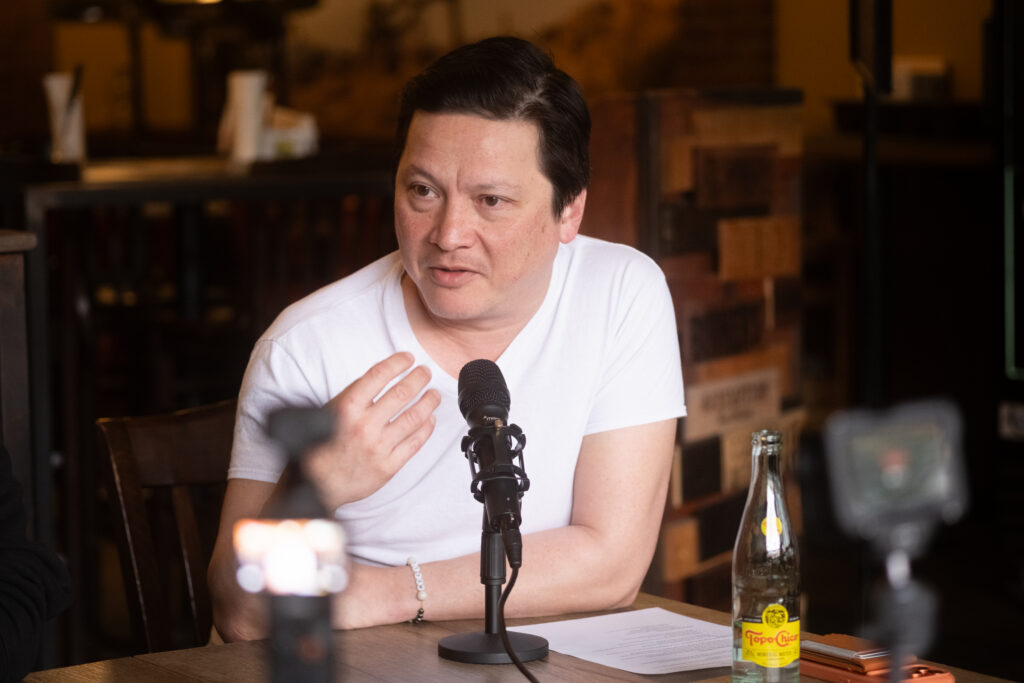
Kenji López-Alt on Wagyu was exactly the kind of conversation we love at The Meat Dudes—smart, honest, practical, and meat-obsessed in the best way possible. When we sat down with Kenji at Lady Jaye, we knew we were going to talk steak, burgers, fat, and cooking technique, but what made this episode special was how clearly he broke down the confusion around Wagyu in America. From what the word even means to how the fat behaves in the pan, this episode was packed with the kind of insight that makes people better cooks and smarter beef buyers.
Kenji is one of the most influential voices in modern food science. He’s the author of The Food Lab and The Wok, and if you’ve spent any time trying to understand why food cooks the way it does, there’s a good chance you’ve learned something from him already. So when we got the chance to talk with him about Wagyu, we wanted to dig into the stuff that matters most to our audience: transparency, marbling, flavor, and how to cook great beef the right way.
What Kenji’s first reaction to Wagyu in America tells us
One of the first things we asked was simple: when you hear “Wagyu” in America today, what’s your honest reaction?
Kenji’s answer was skepticism.
Not because he doesn’t appreciate great beef, but because the term “Wagyu” still covers too much ground in the U.S. It might mean imported Japanese Wagyu. It might mean fullblood American Wagyu. It might mean an F1 cross. It might even mean a product with only a small percentage of Wagyu genetics. That lack of clarity is exactly why so many consumers still feel confused.
That’s a huge reason we keep having these conversations on The Meat Dudes. The industry is still young, and the consumer needs better information. We don’t want Wagyu to feel fake, overhyped, or intimidating. We want people to understand that it’s a spectrum, and that knowing what you’re buying matters.
Kenji also pointed out something that often gets lost: in Japan, “Wagyu” simply means Japanese cattle. But the real story is not just about the name. It’s about genetics, feeding, environment, and how those things shape the beef.
Why Wagyu is different from conventional beef
A big part of the conversation centered around what actually makes Wagyu different. Yes, genetics matter. Wagyu cattle have a different fat profile than most Western breeds, and those genetics help create the softer, more unsaturated fat people associate with highly marbled beef.
But Kenji made another point we really liked: Japan is not a grazing country the way parts of the U.S. are. The way cattle are raised there is different. The way they’re fed is different. And that helps explain why Wagyu developed into a completely different kind of beef experience.
That’s one of the reasons American Wagyu can vary so much too. You can have fullblood, purebred, or F1 cattle. You can have cattle raised in different climates, on different feed programs, by ranchers with very different goals. That means “American Wagyu” can range from barely above prime to completely off the charts.
We’ve seen that ourselves. At the American Wagyu Association steak competition, we judged fullblood entries that looked wildly different from one another. Some were beautifully marbled. Some went beyond what most people would even imagine. And a couple that looked like prime USDA. That’s how broad the category still is.
Kenji López-Alt on Wagyu fat, marbling, and how it cooks
One of the most valuable parts of Kenji López-Alt on Wagyu was hearing him explain what Wagyu fat actually does in cooking.
The difference is not just that there’s more fat. It’s that the fat itself is different. Wagyu fat is softer, more unsaturated, and melts at a lower temperature than conventional beef fat. That changes how it feels in your mouth, how it renders in the pan, and how it carries flavor.
Kenji explained that a conventional steak with lots of fat can sometimes feel waxy if the fat doesn’t melt properly. Wagyu doesn’t behave like that. Even at lower temperatures, the fat softens and melts more easily, which is a huge part of why it feels buttery and tender.
He also made a point we talk about all the time: more marbling does not automatically mean more flavor. A lot of what people love about high-end Wagyu is texture. That silky, melting quality matters. But fat on its own is not enough. You still need good browning. You still need seasoning. You still need the protein side of the steak to bring real beef flavor to the table.
That matters because the Wagyu world can sometimes get too focused on visuals. Everybody wants the craziest marbling shot. But if the steak doesn’t taste great, then the marbling alone doesn’t save it.
Great beef is about more than just fat
That idea led into one of our favorite themes in the episode: what actually defines quality?
Too many people talk about Wagyu as if the only thing that matters is marbling score. But Kenji brought great balance to that conversation. Sometimes the perfect steak experience is a super-rich A5 bite. Other times, it’s a beautifully aged prime ribeye with just the right amount of fat. Sometimes it’s about texture. Sometimes it’s about beef flavor. Sometimes it’s about both.
We loved hearing that because it lines up with how we think about Wagyu as a spectrum. You can love an A5 ribeye and still crave an F1 strip or a fullblood grass-fed steak on a different day. There isn’t one perfect answer, because not every beef experience is supposed to be the same.
That’s what makes this category so exciting.
Kenji’s advice for cooking Wagyu at home
If there’s one thing home cooks needed from this episode, it’s this: Wagyu is actually more forgiving than people think.
Because of the fat content and the softer fat structure, Wagyu can still eat beautifully across a broader range of doneness than a lean cut like tenderloin. That doesn’t mean you should blast it into oblivion, but it does mean people can relax a little.
Kenji’s practical advice was simple:
- keep the seasoning minimal
- use a heavy pan
- pay attention to thickness
- adjust heat as needed
- and use a thermometer instead of trying to guess
He also said something we completely agree with: if you’re really worried, cut into it and check. A steak is not a water balloon. You’re not going to destroy it just because you peeked.
That kind of advice is huge for people who are nervous about cooking expensive beef. Too many consumers are scared to mess up Wagyu, and that fear keeps them from buying it in the first place. The more we can normalize cooking it without making it feel precious, the better it is for everyone—from ranchers to home cooks.
Burgers, crust, and the science of better beef
The burger section of the episode was just as good.
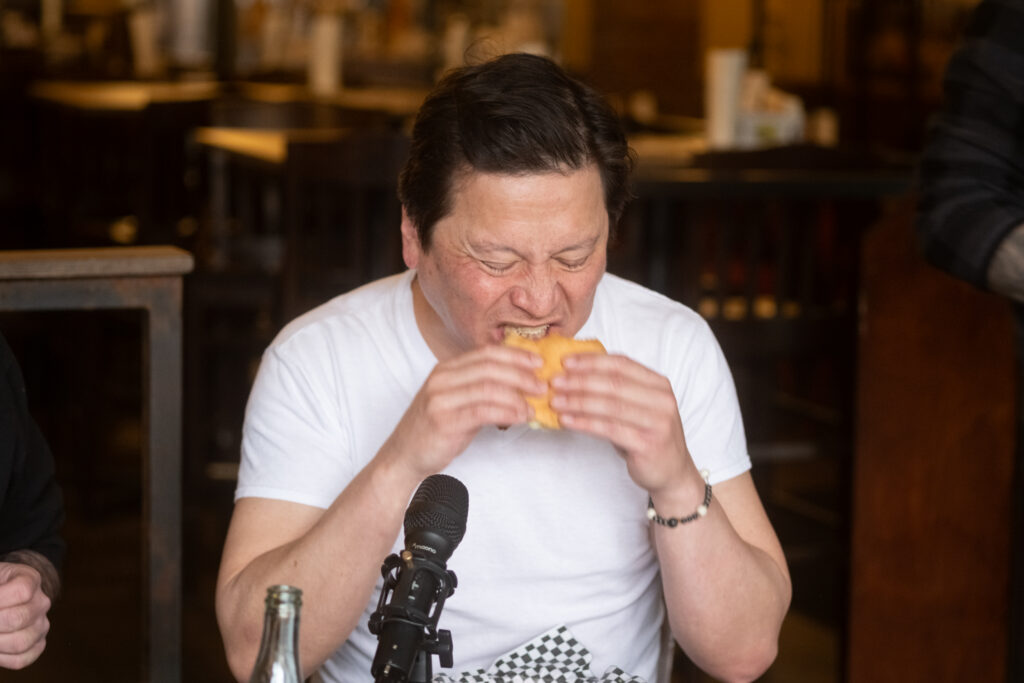
Chef Tyler fired off Wagyu smash burgers for us, and Kenji got into what makes a great burger great: crust, beef flavor, and restraint. He’s not into overmixing things into the meat or turning a burger into a meatloaf sandwich. He wants browning, texture, and a simple build that lets the beef shine.
That led us into a great conversation about crust, the Maillard reaction, and how steak actually browns in a pan. We talked about why fat helps transfer heat, why some cuts need pressing and some don’t, and why flipping a steak more than once is not some kind of culinary crime.
Those details matter because they help people stop relying on old myths and start cooking with real understanding.
Why this episode matters
At the end of the day, Kenji López-Alt on Wagyu was about more than just one interview. It was about bringing clarity to a category that still confuses a lot of people.
Wagyu is not just “fatty beef.” American Wagyu is not one single product. More marbling is not always better. And cooking great beef at home does not need to feel overly complicated.
Kenji brought a thoughtful, grounded, and science-backed perspective that we really respect. He wasn’t trying to hype anything up or tear anything down. He was just helping make sense of what great beef is, how it cooks, and why the details matter.
That’s exactly the kind of conversation we want more of in the Wagyu world.
If you haven’t listened yet, go check out the full episode with Kenji López-Alt on The Meat Dudes podcast. It’s one of our favorite conversations yet, and if you care about cooking better beef, understanding marbling, and getting smarter about Wagyu, this one is for you.