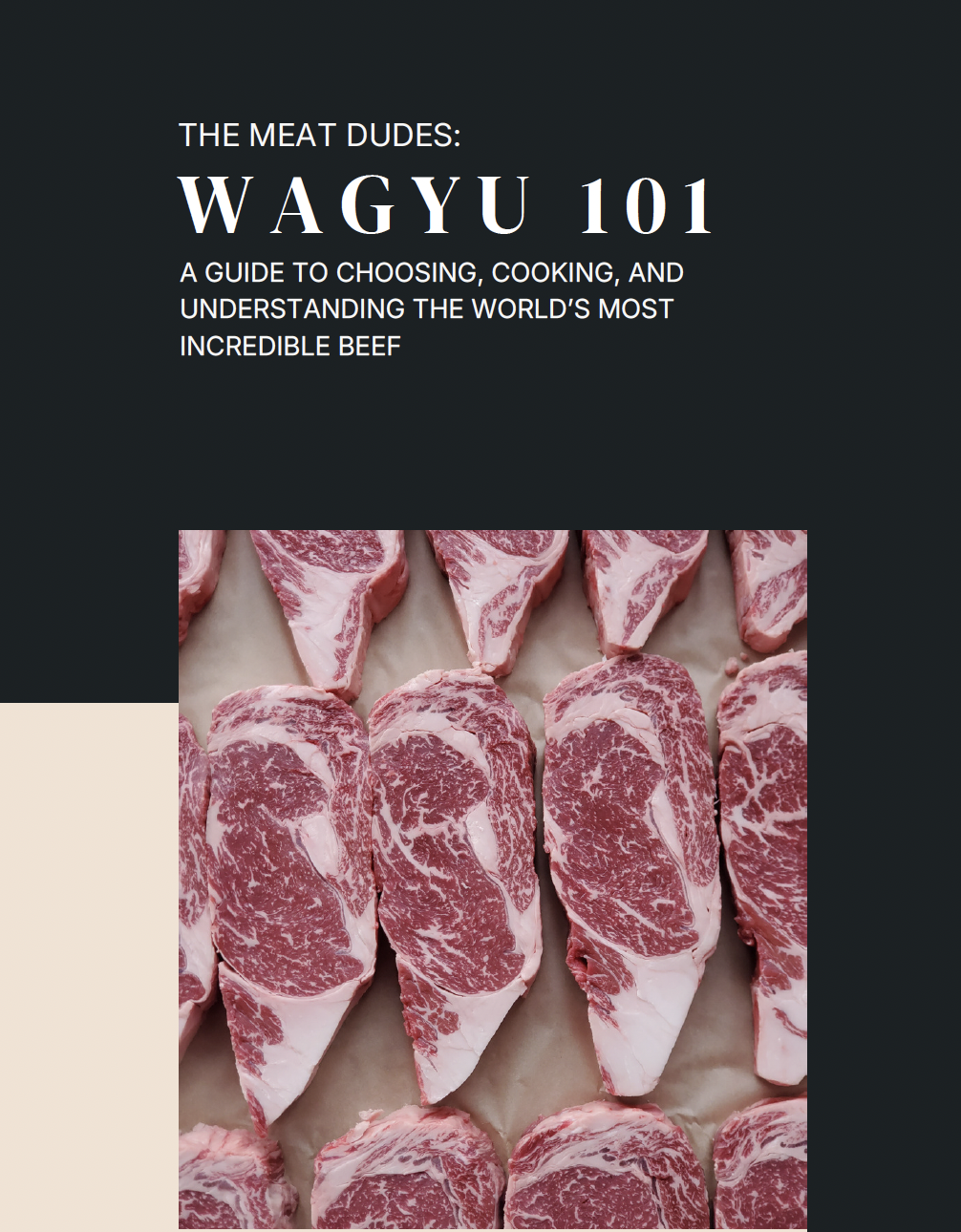

If you’ve ever tried to compare A5 Japanese Wagyu vs American Wagyu, you’ve probably run into the same problem everyone else does: no one explains the differences in a way that actually makes sense. You hear words like “A5,” “F1 cross,” “purebred,” “full blood,” “BMS,” and “prime,” and suddenly you’re more confused than when you started.
So let’s fix that.
Because both are real Wagyu.
Both are delicious.
But they’re raised differently, graded differently, eaten differently, and built for totally different experiences.
By the end of this article, you’ll be able to walk into any butcher shop and actually know what you’re buying—and more importantly, know which one you prefer.
What A5 Wagyu Actually Means (and Why It Matters)
Let’s break down one of the most misunderstood labels in the entire beef world: A5 Wagyu.
In Japan, beef gets two scores:
- A–C: The yield, meaning how much usable meat they got from the carcass.
- 1–5: The quality grade—marbling, color, texture, and fat quality.
So A5 = best yield + best quality.
Then add the BMS (Beef Marbling Score), which runs from 1–12.
Most A5 sits between 8–12, which is insanely high compared to most beef anywhere else in the world.
A5 cattle are fed for 600+ days and harvested around 30–35 months, creating that signature “melt-on-your-tongue, sweet, buttery, almost unreal” experience.
But there’s an important caveat:
A5 isn’t meant to be eaten like an American steak.
In Japan, it’s served in thin slices, 2–3 ounces at a time. It’s a luxury bite, not a 16-ounce dinner.

How American Wagyu Is Graded (Hint: It’s Completely Different)
In the U.S., we don’t use the A–C or 1–5 system.
We use the classic:
- Select
- Choice
- Prime
- Prime+
This system was never designed with Wagyu in mind—so a lot of American Wagyu is literally off the charts compared to regular Prime beef.
American Wagyu generally comes in three genetic categories:
- F1 Cross (50% Wagyu × 50% Angus/Holstein/etc.)
- Purebred (93.75% Wagyu)
- Full Blood (100% traceable Wagyu lineage)
A really nice American Full-Blood steak might land around BMS 6–9, sometimes higher. Many F1 crosses fall in the 4–7 range—which is still richer than typical USDA Prime beef.
So can American Wagyu be “A5”?
No—because they’re graded on completely different systems.
But can an American Full Blood have marbling similar to a Japanese A5?
Absolutely. It happens more often than people think.
Flavor: The Real Difference Between A5 and American Wagyu
Here’s where personal preference kicks in.
A5 Wagyu Tastes:
- Buttery
- Sweet
- Highly rich
- Soft, delicate texture
- Incredible for small bites
American Wagyu Tastes:
- Beefier, more savory
- Still rich, thanks to the Wagyu fat
- More structure and chew
- Built for steaks, burgers, brisket—American-style eating
Think of it this way:
A5 is caviar.
American Wagyu is a perfectly pan-seared ribeye.
Both elite. Both incredible.
Just… different.
Which One Is Better? Here’s the Real Answer.
It depends on:
- How much you want to eat
- What you’re celebrating
- How you cook
- What flavors you enjoy
If you want mind-blowing luxury in a couple bites, go A5.
If you want everyday excellence, full steaks, grilling, smoking, burgers, go American Wagyu.
There is no winner.
There is only preference.
How to Taste the Difference Like a Pro
Here’s the simplest comparison experiment you can do:
- Buy a $15–$20 sliver of A5 Wagyu (they’ll usually sell small portions).
- Buy a $20–$30 American Wagyu cut—try a Zabuton, Bavette, Skirt, or Ranch Steak.
- Cook them simply: salt and pepper only.
- Taste side by side.
You’ll instantly understand the difference in texture, richness, melt-point, and flavor.
Most people walk away saying:
“A5 is my celebration steak.
American Wagyu is my everyday steak.”
The Bottom Line: It’s Not About Country. It’s About Craft.
Japanese Wagyu is legendary.
American Wagyu is innovative, delicious, and built for the American palate.
Both are Wagyu.
Both are special.
Both deserve a place in your kitchen.
So don’t pick one.
Try both.
Learn your preference.
And enjoy the ride.
Let us know what you prefer: A5 Japanese Wagyu vs American Wagyu
Learn more on the Meat Dudes Youtube